Airen: The Resurgence of Mid-Century Elegance in Modern Typography
In the rapidly evolving landscape of digital design, where minimalist sans-serifs often dominate screens and user interfaces, there is a growing counter-movement toward warmth, history, and character. At the forefront of this shift stands Airen, a stylish vintage-style display font that captures the essence of classic mid-20th-century typography. With its elegant serifs and graceful curves, Airen exudes sophistication and nostalgia, offering designers a powerful tool to bridge the gap between retro charm and contemporary relevance. For professionals, creators, and entrepreneurs alike, understanding the impact of fonts like Airen is no longer just an aesthetic choice; it is a strategic decision that influences brand perception, consumer trust, and market differentiation.
The Essence of Airen: More Than Just a Typeface
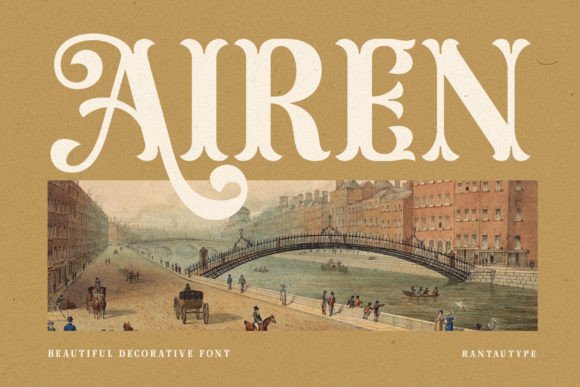
To understand why Airen has captured the attention of the creative community, one must first appreciate its design philosophy. Unlike generic serif fonts that simply mimic the structure of old printing presses, Airen is crafted with a specific emotional resonance in mind. It is reminiscent of the golden age of advertising and editorial design, a period where print was king and typography carried significant weight in storytelling.
The defining characteristics of Airen lie in its delicate balance of form and function. The elegant serifs provide a sense of stability and tradition, while the graceful curves introduce fluidity and movement. This combination creates a visual rhythm that guides the eye effortlessly across headlines and logos. When applied to branding or packaging, Airen does not merely display text; it imbues the message with a timeless and refined touch. It suggests a narrative of quality, heritage, and craftsmanship, qualities that are increasingly scarce in the fast-paced digital economy.
Why Nostalgia Drives Modern Design Trends
The popularity of fonts like Airen cannot be viewed in isolation; it is deeply rooted in broader cultural and market trends. We are currently witnessing a significant "retro-futurism" wave, where consumers and brands alike are looking backward to move forward. In an era defined by algorithmic feeds, AI-generated content, and hyper-digital interactions, there is a profound human desire for authenticity and tangible connection.
Vintage aesthetics serve as a comforting anchor in this chaotic environment. They evoke memories of a time when products were perceived as more durable and relationships felt more personal. By integrating Airen into their visual identity, businesses tap into this collective sentiment. The font acts as a visual shorthand for reliability and elegance. Whether it is a boutique coffee roaster seeking to emphasize artisanal quality or a fashion label aiming to project high-end luxury, Airen provides the necessary gravitas to elevate the brand above the noise of modern minimalism.
Strategic Applications Across Industries
The versatility of Airen extends far beyond simple decoration. Its application spans various sectors, each leveraging the font's unique attributes to meet specific business objectives. From lifestyle brands to tech startups, the integration of vintage typography signals a shift in how companies communicate value.
Branding and Identity Systems
For entrepreneurs building new ventures, the logo is the cornerstone of identity. Airen offers a distinct alternative to the ubiquitous geometric sans-serifs found in the startup ecosystem. When used in a logo, Airen communicates confidence and established authority, even for a young company. It allows a brand to appear as if it has always existed, fostering an immediate sense of trust with potential customers. This psychological effect is crucial in competitive markets where differentiation is key.
- Luxury Goods: High-end cosmetics and jewelry brands utilize Airen to suggest exclusivity and heritage.
- Culinary Arts: Bakeries, wineries, and craft breweries use the font to highlight traditional methods and premium ingredients.
- Fashion: Apparel brands leverage the style to create a sense of enduring style over fleeting trends.
Packaging and Product Experience
In the realm of physical goods, packaging is the first point of tactile interaction between the consumer and the product. Here, Airen shines as a critical component of the unboxing experience. The font's readability at small sizes, combined with its decorative flair, ensures that product labels look premium on shelves and social media feeds alike. As e-commerce continues to grow, the need for packaging that translates well from a thumbnail image to a physical object is paramount. Airen bridges this gap, ensuring that the promise of quality made online is fulfilled upon delivery.
Editorial and Content Strategy
Digital publishing is also undergoing a renaissance, moving away from stark, utilitarian layouts toward more immersive reading experiences. Editorial designs that incorporate Airen for headlines and pull quotes create a magazine-like feel that encourages deeper engagement. Readers are more likely to spend time on content that feels curated and thoughtful. By using Airen, publishers can signal that their content is worth the reader's time, elevating the perceived value of articles, newsletters, and blogs.
Shifting Workflows and Consumer Expectations
The rise of fonts like Airen reflects a fundamental change in the expectations of both creators and consumers. Today's audience is visually literate; they can instantly distinguish between mass-produced templates and bespoke design choices. They expect brands to have a voice, a personality, and a story. Generic typography fails to deliver this, often resulting in a brand that feels faceless and forgettable.
Furthermore, the workflow of modern creatives has evolved. With the advent of sophisticated design tools and cloud-based collaboration platforms, accessing and implementing high-quality typefaces like Airen has never been easier. Designers are no longer constrained by technical limitations but are instead driven by the need for emotional impact. The ability to quickly prototype and test different typographic treatments allows teams to iterate faster, finding the perfect balance between nostalgia and modernity.
This shift also impacts marketing strategies. Marketers are realizing that consistency in visual language builds stronger brand equity. Using a font like Airen consistently across all touchpoints—from social media graphics to email signatures—creates a cohesive narrative. It reinforces the brand's values and makes it instantly recognizable in a crowded marketplace.
Observations on Market Differentiation
Consider the current saturation of the tech industry. Many software companies struggle to convey warmth and approachability. By incorporating a vintage-inspired font like Airen into their UI elements or marketing materials, these companies can soften their image and connect with users on a more human level. It is a subtle yet powerful way to say, "We are technology, but we are also people."
Similarly, in the lifestyle sector, the demand for sustainability and ethical production is rising. Brands that align themselves with these values often find that vintage aesthetics complement their messaging perfectly. The idea of "old world" craftsmanship resonates with consumers who prioritize longevity and quality over disposability. Airen becomes a visual representation of these core values, reinforcing the brand's commitment to doing things the right way.
The Future of Typography: Blending Eras
As we look toward the future, the trajectory of typography suggests a continued blending of eras. The strict dichotomy between "modern" and "vintage" is dissolving. Instead, we are seeing a synthesis where the structural integrity of classical design meets the dynamic needs of digital media. Airen exemplifies this evolution. It is not a relic of the past but a living, breathing tool for the present and future.
Technological advancements will only enhance the utility of such fonts. Variable font technology, for instance, could allow designers to adjust the weight and width of Airen dynamically, adapting it to various screen sizes and contexts without losing its essential character. This adaptability ensures that fonts like Airen remain relevant as devices and platforms evolve.
Moreover, as artificial intelligence begins to play a larger role in design, the human element becomes even more precious. Fonts that carry historical weight and emotional depth, like Airen, offer a safeguard against the homogenization of AI-generated content. They remind us of the artistry and intention behind every design decision.
Conclusion: Embracing Timeless Refinement
In conclusion, Airen represents more than just a collection of characters; it embodies a mindset. It is a response to the need for authenticity, elegance, and connection in a digital-first world. For professionals, creators, and entrepreneurs, adopting Airen is an opportunity to stand out, to tell a richer story, and to build a brand that resonates on a deeper level.
Whether you are designing a new logo, revamping a packaging line, or crafting an editorial layout, the influence of Airen is undeniable. Its graceful curves and elegant serifs offer a timeless and refined touch that transcends temporary trends. As the market continues to mature and consumers become more discerning, the value of such thoughtful design choices will only increase. By embracing the sophistication of Airen, brands can ensure that their message is not just seen, but felt and remembered.
The journey of design is a continuous exploration of how we communicate our values. In this journey, Airen serves as a guiding light, reminding us that sometimes, the best way to innovate is to honor the past. As we move forward, let us carry this lesson with us, using tools like Airen to create work that is not only beautiful but meaningful.