Barons: The Bold Typography That Commands Attention
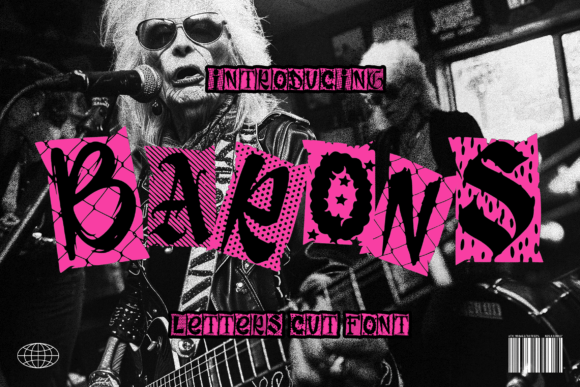
In the crowded landscape of digital and print media, the ability to capture immediate attention is a currency more valuable than ever. Designers, marketers, and creators constantly search for visual elements that cut through the noise. Enter Barons, a bold letter cut display font that has carved out a distinct niche in the world of typography. Unlike standard serif or sans-serif typefaces designed for body text, Barons is engineered specifically for impact. It is strong, eye-catching, and possesses a structural integrity that makes titles and headlines stand out with undeniable authority. Whether you are designing a poster for a music festival, crafting a logo for a startup, or creating a presentation slide that needs to make a statement, understanding the nuances of this typeface can elevate your visual communication.
The Anatomy of Impact: Defining the Barons Aesthetic
To truly utilize a font like Barons, one must first understand its geometric DNA. It is not merely "thick" text; it is a carefully constructed display typeface where every stroke serves a purpose. The defining characteristic of Barons lies in its heavy weight and sharp, clean edges. This creates a silhouette that is instantly recognizable even at small sizes, though it truly shines when scaled up. The letterforms often feature high contrast between the thick strokes and the negative space within characters like 'O' or 'A', creating a dynamic tension that draws the eye inward before snapping back outward to the surrounding layout.
What sets Barons apart from other bold fonts is its lack of decorative frills. In an era where minimalism meets maximalism, Barons strikes a balance by being aggressively simple yet visually loud. It avoids the ornamental curves of traditional serifs or the rounded softness of bubble letters. Instead, it relies on straight lines, sharp angles, and a robust presence. This makes it a versatile tool for modern design projects that require a sense of urgency, strength, or confidence. When you apply Barons to a headline, you are essentially telling the viewer, "Look here first." It is a command written in ink and pixels, demanding engagement without ambiguity.
Visual Weight and Legibility in High-Stakes Environments
One of the most critical aspects of using Barons effectively is managing its visual weight. Because the font is so dense, it can easily overwhelm a layout if not given enough breathing room. The kerning—the space between individual letters—must be adjusted meticulously. In many cases, tightening the tracking slightly can enhance the blocky, solid feel of the word, while loosening it can create a more airy, expansive look. However, legibility remains paramount. Even with its bold nature, Barons maintains clear distinctions between similar characters, such as 'I', 'l', and '1', which is crucial for headers that might include numbers or codes.
This clarity extends to various mediums. On a billboard viewed from a highway, the thick strokes of Barons ensure the message is readable in a split second. On a mobile screen, where real estate is limited, the font's distinct shape ensures that key calls to action are not lost amidst cluttered interfaces. For professionals working in advertising, this reliability is non-negotiable. A font that looks good in a studio but fails on a large format print or a low-resolution screen is a liability. Barons, however, scales with grace, retaining its punch regardless of the canvas size.
Strategic Applications Across Industries
The versatility of Barons allows it to transcend specific industry boundaries, making it a favorite among diverse groups of creators. Its application ranges from the gritty aesthetic of streetwear brands to the authoritative tone of corporate announcements. By examining how different sectors leverage this typeface, we can uncover practical strategies for implementation.
- Event Marketing and Posters: Perhaps the most natural home for Barons is in event promotion. Concert posters, conference banners, and workshop flyers benefit immensely from its loud character. The font conveys energy and excitement, suggesting that the event is a major occurrence that cannot be missed. When paired with vibrant colors and dynamic imagery, Barons anchors the composition, ensuring the event name and date are the focal points.
- Brand Identity and Logos: For startups and established businesses alike, a logo needs to be memorable. Barons offers a level of memorability that softer fonts struggle to achieve. Tech companies, fitness centers, and automotive brands often gravitate toward this style because it implies durability and power. A logo utilizing Barons suggests a brand that is confident, stable, and ready to lead the market.
- Packaging Design: In the retail environment, products compete for shelf space. Packaging that utilizes Barons for product names or key selling points stands out against competitors using thinner, more traditional typefaces. It works particularly well for food and beverage brands aiming for a bold flavor profile, or for industrial products that need to communicate ruggedness and reliability.
- Digital Interfaces and UI: While not suitable for body copy, Barons is excellent for section headers, navigation buttons, and hero sections on websites. In user interface design, hierarchy is key. Using Barons for primary headings creates a clear visual path for the user, guiding them through the content flow efficiently.
Navigating the Workflow: Implementation Best Practices
Integrating Barons into a design workflow requires a shift in mindset compared to working with standard text fonts. Because it is a display font, it should rarely be used for long paragraphs. The density of the letters makes reading extended text difficult and fatiguing for the eyes. Therefore, the golden rule of working with Barons is restraint. Use it sparingly to highlight the most important information.
When setting up a document or a web page, consider the pairing strategy. Barons is a dominant personality; it pairs best with understated, neutral sans-serif or serif fonts for body text. This contrast allows the Barons headlines to pop without fighting for attention against the supporting text. For example, pairing Barons with a clean, geometric sans-serif like Helvetica or a classic serif like Garamond creates a balanced hierarchy. The boldness of the header grabs the reader, while the simplicity of the body text invites them to stay and read further.
Color selection also plays a pivotal role in maximizing the potential of Barons. While black on white is always effective, experimenting with high-contrast color combinations can amplify the font's impact. Neon accents against dark backgrounds, or metallic gradients applied to the letterforms, can give Barons a contemporary edge. However, designers must be cautious with texture overlays. Because the font already has a strong visual presence, adding too much texture can muddy the details and reduce legibility. Keep the treatment clean to maintain the font's inherent strength.
Accessibility Considerations in Modern Design
As digital accessibility becomes a standard requirement rather than an afterthought, the choice of typography takes on new significance. Fonts like Barons, with their thick strokes and clear shapes, can actually aid accessibility when used correctly. Users with visual impairments often struggle with thin, delicate fonts that blur on screens or print poorly. The robust nature of Barons ensures that characters remain distinct and readable even at lower resolutions or for those with reduced visual acuity.
However, the high contrast and density can pose challenges if the background color is not chosen carefully. Ensuring sufficient contrast ratios between the text and the background is essential. Additionally, avoiding all-caps for long phrases is recommended, as the uniform height of capital letters in a bold font like Barons can sometimes reduce readability speed. Mixing case usage, where appropriate, can improve recognition rates while maintaining the bold aesthetic.
The Psychology of Bold Typography
Beyond the technical specifications and design rules, there is a psychological component to using a font like Barons. Typography influences how we perceive a message before we even read the words. Bold, heavy fonts trigger associations with stability, authority, and importance. When a consumer sees a headline in Barons, they subconsciously register the message as significant. This is why it is so effective in crisis communications, sales promotions, and brand manifestos.
Conversely, overusing bold typography can lead to visual fatigue and a perception of shouting. If every element on a page is bold, nothing stands out. This is where the strategic use of Barons comes into play. By reserving it for the most critical messages, designers create a rhythm in the visual experience. The eye rests on the bold headline, absorbs the message, and then moves to the lighter body text for details. This interplay creates a narrative flow that guides the audience through the content with intention.
Furthermore, the cultural context of bold fonts is evolving. In the past, ultra-bold fonts were often associated with tabloids or sensationalist news. Today, thanks to the rise of modernist design trends and the influence of street culture, bold typefaces like Barons have been recontextualized as symbols of confidence and innovation. They represent a break from tradition, signaling that a brand or creator is unafraid to take up space and assert their identity.
Future Trends and the Evolution of Display Fonts
Looking ahead, the demand for impactful display fonts like Barons shows no sign of waning. As digital screens become larger and more ubiquitous, from smartwatches to massive LED billboards, the need for typography that retains its character across devices is increasing. We are likely to see more variations of bold, geometric fonts emerging, each trying to capture that same essence of strength and clarity that Barons embodies.
Additionally, the integration of variable fonts may offer new ways to manipulate the weight and width of typefaces like Barons dynamically. Imagine a website where the headline subtly adjusts its thickness based on the user's scroll position or interaction. While Barons currently exists as a static typeface, the principles behind its design will undoubtedly influence the next generation of responsive typography. Creators who master the fundamentals of bold display fonts now will be well-positioned to adapt to these technological advancements.
In conclusion, Barons is more than just a collection of thick letters; it is a strategic asset in the toolkit of any visual communicator. Its ability to command attention, convey authority, and maintain legibility across diverse platforms makes it an invaluable resource. Whether you are a professional designer, a business owner looking to refresh your brand, or a hobbyist exploring the world of graphic arts, understanding how to wield Barons effectively can transform your projects. By respecting its limitations and leveraging its strengths, you can create designs that not only look good but also speak volumes to your audience.