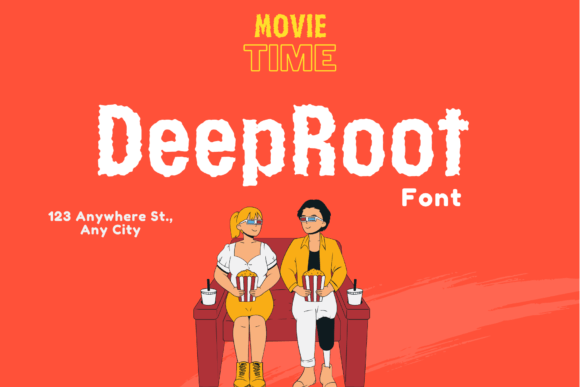
Deeproot Font: Organic Growth and Timeless Elegance
In a digital landscape often dominated by rigid grids and sterile sans-serifs, there is a growing desire for typography that breathes. Deeproot answers this call by capturing the essence of organic growth and timeless elegance. Inspired by the intricate, subterranean patterns found in nature's roots, this font style exudes a sense of groundedness and authenticity. It is not merely a collection of characters; it is a visual narrative of stability and connection. With its graceful curves and flowing lines, Deeproot adds a touch of sophistication to any design while maintaining a profound connection to the natural world.
Whether you are crafting a brand identity, designing an editorial layout, or working on a personal artistic project, Deeproot brings depth and character to your work. It roots your message in beauty and tradition, offering a unique alternative to the standard typefaces that clutter our screens. But what exactly makes this font resonate so deeply with such a wide range of users? To understand its value, we must look beyond the aesthetics and explore how different audiences—from beginners to seasoned professionals—can leverage its unique qualities to meet their specific goals.
The Essence of Organic Typography
At its core, Deeproot is designed to mimic the fluidity of life itself. Unlike geometric fonts that rely on perfect circles and straight lines, Deeproot embraces the irregularities found in nature. The letterforms feature subtle variations in stroke width and curvature, reminiscent of how a root system navigates through soil, seeking nutrients and stability. This biological inspiration creates a visual rhythm that feels familiar to the human eye, evoking feelings of trust, heritage, and calm.
This grounding quality is crucial in modern design. As consumers become increasingly aware of environmental issues and the need for sustainability, brands are seeking visual languages that reflect these values. Deeproot serves as a bridge between the digital and the natural, allowing creators to communicate authenticity without saying a word. It suggests that a business or idea is well-established, reliable, and connected to something larger than itself.
For Beginners and Hobbyists: A Gateway to Sophistication
For those just starting their journey into design, choosing the right typeface can feel overwhelming. There is often a fear that using complex fonts requires advanced technical skills or expensive software. However, Deeproot offers a surprising level of accessibility. Its inherent elegance means that even simple text layouts can appear polished and professional.
Hobbyists creating invitations, greeting cards, or personal blogs will find that Deeproot elevates their work instantly. Because the font carries so much character on its own, it reduces the need for excessive graphic embellishments. A beginner can pair Deeproot with plenty of white space and a high-quality paper texture image to create a sophisticated wedding invitation suite without needing a degree in graphic design.
The learning curve is gentle. Beginners often struggle with kerning (the spacing between letters) in complex scripts, but the balanced structure of Deeproot allows for intuitive adjustments. It teaches new designers about the importance of flow and rhythm in typography. For a hobbyist looking to express creativity without getting bogged down in technical minutiae, Deeproot provides a safe yet stylish foundation.
Professionals and Marketers: Building Trust and Brand Identity
For marketers and branding professionals, every design decision must serve a strategic purpose. The choice of font is rarely just about aesthetics; it is about psychology and market positioning. Deeproot is particularly valuable for industries where trust, heritage, and quality are paramount. Think of organic food brands, sustainable fashion labels, wellness centers, or boutique financial firms.
When a marketing team uses Deeproot, they are signaling to their audience that the brand is "grounded." In a sea of fast-paced, disposable trends, a brand that looks rooted suggests longevity. This is essential for building long-term customer loyalty. Professionals might use Deeproot for logo design, packaging, or campaign headlines to differentiate their client from competitors who rely on generic, overused typefaces.
Entrepreneurs launching a new small business also benefit from this association. A startup needs to look established to gain immediate credibility. By adopting a font like Deeproot, a new company can visually borrow the authority of tradition while still feeling fresh and relevant. It strikes a delicate balance between innovation and stability, which is often the sweet spot for successful modern businesses.
Educators and Publishers: Enhancing Readability and Atmosphere
In the realm of education and publishing, the atmosphere of the text is just as important as the information it conveys. Educators developing course materials on topics like botany, ecology, history, or literature may find Deeproot to be an engaging tool. Using it for chapter headings or pull quotes can break up dense text and create a thematic link to the subject matter.
Similarly, publishers working on coffee table books, poetry collections, or lifestyle magazines often seek fonts that add a layer of emotional resonance. Deeproot works exceptionally well in editorial design where the goal is to immerse the reader in a story. Its flowing lines guide the eye smoothly across the page, reducing reading fatigue compared to sharper, more aggressive typefaces.
For educators, the font also serves as a teaching aid. It can be used to demonstrate concepts of organic forms, symmetry, and asymmetry in art classes. Students can analyze how the curves of the letters mimic natural structures, turning a simple font study into a lesson on biomimicry and design principles.
Practical Applications Across Industries
- Sustainable Packaging: Use Deeproot for product labels on artisanal soaps, teas, or skincare products to emphasize natural ingredients.
- Event Branding: Ideal for botanical garden events, eco-summits, or rustic weddings where the theme aligns with nature.
- Digital Content: Bloggers focusing on mindfulness, gardening, or slow living can use Deeproot for headers to set a calming tone.
- Stationery Design: Business cards and letterheads for architects, therapists, and consultants who want to project warmth and approachability.
Evaluating Fit: Is Deeproot Right for Your Project?
While Deeproot offers significant benefits, it is not a one-size-fits-all solution. Evaluating whether this font matches your specific goals requires considering your priorities regarding ease of use, cost, quality, and flexibility.
If your primary concern is speed and mass readability for large blocks of body text, Deeproot might be better suited for headlines and accents rather than paragraphs. Its intricate details are best appreciated at larger sizes. Conversely, if your priority is creativity and standing out in a crowded market, Deeproot excels. It offers a distinct voice that few other fonts can replicate.
Consider your commercial value. If you are selling a luxury service or a premium product, the perceived quality of Deeproot can justify higher price points. It signals attention to detail and care. However, for tech startups aiming for a futuristic, minimalist vibe, a more geometric font might align better with their brand narrative.
Ultimately, the decision comes down to the story you want to tell. Does your project need to feel fast and efficient, or deep and meaningful? If the answer leans toward the latter, Deeproot provides the visual vocabulary to bring that vision to life. It invites the viewer to pause, look closer, and appreciate the beauty of the details—much like observing the hidden complexity of a tree's root system beneath the surface.
By understanding the diverse ways this font can be applied, from a beginner's first flyer to a multinational brand's rebranding effort, you can make an informed choice. Deeproot is more than a style; it is a tool for connecting your message to the timeless values of nature, growth, and authenticity.