Digital Watch: The Power of Legible Typography
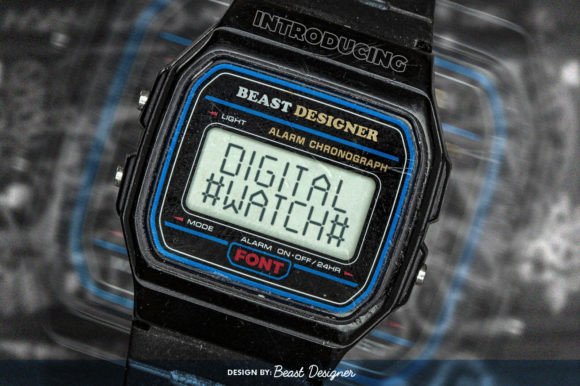
In a world saturated with information, the ability to process data instantly is a superpower. Nowhere is this more critical than in the realm of timekeeping, where a split-second delay in reading a display can mean missing an appointment or failing to catch a train. This is where the Digital Watch aesthetic comes into play, not just as a visual style for devices, but as a fundamental design philosophy rooted in clarity and efficiency. At its core, the Digital Watch Font is a typeface designed specifically for use in digital alarm clocks and other timekeeping devices. It is characterized by clear, legible numerals and symbols, and a modern, minimalistic design that is easy to read at a quick glance.
While many might dismiss this font style as merely functional, professionals across various fields—from graphic designers and app developers to educators and entrepreneurs—are increasingly recognizing its value beyond the wrist or bedside table. Understanding the mechanics behind this typography offers insights into how we communicate urgency, organize data, and prioritize readability in our daily workflows.
The Science Behind Instant Readability
The primary advantage of the Digital Watch typeface lies in its adherence to human cognitive processing limits. When you glance at a traditional analog clock, your brain must interpret the position of hands relative to numbers, a process that requires spatial reasoning. In contrast, a digital display using this specific font presents information directly. The characters are constructed with distinct segments, often mimicking the seven-segment displays found in early electronic devices, yet refined for modern screens.
This design choice eliminates ambiguity. The numeral "1" does not look like "7," and "0" is clearly distinguished from "O." For professionals who rely on precise timing—such as surgeons monitoring procedures, athletes tracking splits, or traders watching market ticks—this distinction is vital. The Digital Watch Font ensures that the message is received without cognitive friction. In high-stakes environments, reducing the time it takes to decode information can lead to faster decision-making and reduced error rates.
Why Minimalism Matters in Modern Design
Beyond the mechanics of the segments, the overall aesthetic of the Digital Watch style is inherently minimalistic. It strips away serifs, decorative flourishes, and unnecessary curves. This reductionism serves a dual purpose: it enhances legibility at small sizes and maintains visual consistency across different mediums. For marketers and content creators, this translates to a versatile tool for presenting data-heavy graphics. When creating infographics or dashboards, utilizing a font inspired by this style allows viewers to focus on the metrics rather than the decoration.
Consider a project manager presenting a timeline to stakeholders. A complex script font might look elegant but could obscure the critical dates. By switching to a clean, blocky typeface reminiscent of the Digital Watch Font, the manager ensures that the deadlines stand out immediately. This approach respects the audience's time and reinforces the importance of the data being presented. It signals that the content is factual, urgent, and requires immediate attention.
Practical Applications Beyond Timekeeping
While the origins of this typeface are tied to alarm clocks and watches, its utility extends far beyond personal timepieces. Entrepreneurs and small business owners can leverage the principles of this design to improve their operational efficiency. For instance, in warehouse management or logistics, signage and inventory labels often need to be read quickly by workers moving through aisles. Using a font with the same structural integrity as the Digital Watch style ensures that product codes and safety warnings are unmistakable, even from a distance or in low-light conditions.
Educators also find value in this typographic approach. When creating worksheets, flashcards, or presentation slides for students with dyslexia or visual processing challenges, the clarity of these numerals can make a significant difference. The uniform weight and spacing prevent letters from blending together, allowing learners to focus on the content rather than struggling to decipher the text. This inclusivity demonstrates how a design originally meant for machines can profoundly benefit human learning experiences.
- App Development: Mobile applications dealing with fitness tracking, countdowns, or financial data often adopt this style to convey precision and reliability.
- Web Interfaces: Dashboards for SaaS platforms use similar fonts to display key performance indicators (KPIs), ensuring users grasp their status at a glance.
- Event Planning: Digital signage at conferences uses this aesthetic for session times and room numbers, guiding attendees efficiently through crowded venues.
Who Benefits Most from This Approach?
The versatility of the Digital Watch aesthetic means that a wide range of individuals can benefit from understanding and applying its principles. Freelancers and bloggers, who often juggle multiple deadlines, can use this mindset to structure their content. Headlines that mimic the directness of a digital display tend to perform well because they promise immediate value. Instead of vague, poetic titles, a headline that clearly states the outcome—much like a clock stating the time—can drive higher engagement.
For publishers and editors, the Digital Watch Font offers a solution for technical documentation and instructional manuals. When explaining a step-by-step process, clarity is paramount. Using a typeface that prioritizes legibility reduces the likelihood of user error. If a reader is following instructions to assemble furniture or calibrate equipment, the last thing they want is to misread a measurement because the font was too stylized. In these scenarios, the "boring" reliability of this design becomes its greatest asset.
Navigating Limitations and Fit Considerations
Despite its strengths, it is important to recognize situations where the Digital Watch style may not be the best fit. Its rigid, geometric nature can sometimes feel cold or impersonal if used in contexts requiring warmth, empathy, or luxury. For example, a wedding invitation or a brand identity for a boutique spa would likely suffer if dominated by this stark, utilitarian typeface. The very traits that make it excellent for data visualization—sharp angles and uniform strokes—can clash with designs aiming for organic flow or emotional connection.
Furthermore, while the font is excellent for short bursts of information, such as numbers and acronyms, it may lack the character variety needed for long-form body text. Reading a novel in a seven-segment style font would be exhausting due to the repetitive shapes and lack of letterform nuance. Therefore, users should compare options carefully. The ideal application often involves pairing this font with a more traditional serif or sans-serif typeface, using the Digital Watch Font strictly for headers, data points, and call-to-action buttons where impact and speed are required.
Enhancing Communication Through Clarity
Ultimately, the enduring appeal of the Digital Watch design lies in its commitment to truthfulness. It does not try to hide behind decoration; it presents information exactly as it is. In an era where digital noise competes for our attention, this honesty is refreshing. Whether you are designing a new interface, planning a marketing campaign, or simply organizing your daily schedule, adopting the principles of this typeface can streamline your workflow and improve communication.
By prioritizing legibility and minimizing visual clutter, you empower your audience to act quickly and confidently. The Digital Watch Font reminds us that good design is not about adding more, but about removing the obstacles that stand between the user and the information they need. As we continue to navigate a fast-paced digital landscape, the lessons learned from this humble, efficient typeface remain as relevant today as they were when the first digital alarm clocks began to tick.