Grosac: Defining the Visual Language of Modern Gaming
In the rapidly evolving landscape of digital entertainment, typography serves as more than just a vehicle for text; it is a primary instrument of atmosphere and immersion. When designers seek to bridge the gap between static interfaces and dynamic virtual worlds, they often turn to specialized typefaces that embody the spirit of play. Grosac emerges as a standout solution in this category, a game display font engineered to capture the pulse of gaming culture. Unlike standard sans-serif or serif fonts designed for legibility in body copy, Grosac is crafted specifically for headlines, logos, and high-impact visual elements where energy and character take precedence.
The digital adventure begins with the first impression a user receives upon entering a game environment or viewing promotional material. A font like Grosac does not merely sit on the screen; it interacts with the viewer, evoking the thrill of epic quests and the tension of competitive battles. By analyzing the structural integrity and aesthetic philosophy behind Grosac, we can understand why it has become a preferred choice for professionals ranging from indie developers to major studio art directors.
The Architecture of Digital Excitement
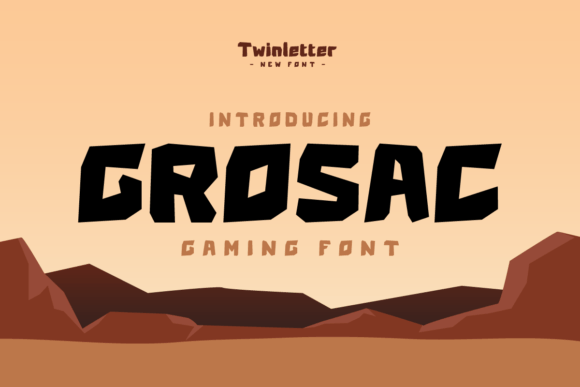
To appreciate the utility of Grosac, one must first examine its typographic DNA. Display fonts are distinct from text fonts because they are optimized for large sizes and short durations of reading. In the context of gaming, these fonts must convey movement, power, and futuristic aesthetics without sacrificing readability at a glance. Grosac achieves this through a combination of bold strokes, angular terminals, and a sense of forward momentum built into the letterforms.
Each letter in the Grosac family pulsates with energy, a quality achieved through careful manipulation of negative space and stroke weight. The design avoids the overly rounded softness of casual fonts, opting instead for sharper edges that suggest precision and speed. This geometric approach aligns perfectly with the sci-fi and fantasy genres that dominate the current market. Whether representing a cybernetic interface or an ancient rune, the versatility of the shape allows the font to adapt to various narrative settings while maintaining a cohesive visual identity.
Furthermore, the font's construction supports high contrast, making it ideal for environments where text must stand out against complex, busy backgrounds. In a typical game scene filled with particle effects, explosions, and detailed textures, a weak typeface can easily get lost. Grosac cuts through the visual noise, ensuring that critical information—such as score updates, mission objectives, or player names—remains instantly visible. This functional aspect is crucial for user experience (UX) design, where clarity directly impacts player engagement and retention.
Visual Dynamics and Emotional Resonance
Beyond the technical specifications, the emotional resonance of a font cannot be overstated. Typography triggers subconscious associations in the viewer. When a gamer sees a title rendered in Grosac, the brain immediately associates the visual style with action, adventure, and excitement. This psychological connection is vital for marketing materials. A logo that feels static or generic fails to communicate the intensity of the gameplay, whereas a logo utilizing the dynamism of Grosac promises an immersive experience before the player even presses "Start."
The font's ability to evoke virtual realms is rooted in its stylistic cues. The slight slant often found in its characters suggests velocity, mimicking the motion blur seen in fast-paced racing games or platformers. Meanwhile, the robust weight of the letters conveys stability and strength, essential traits for strategy games or role-playing adventures where players build empires or wield powerful artifacts. By balancing these opposing forces of speed and solidity, Grosac creates a unique visual rhythm that keeps the audience engaged.
Strategic Applications in Game Development
The practical application of Grosac extends across multiple facets of the game development lifecycle. From the initial concept phase to the final user interface (UI) implementation, this typeface offers a consistent thread of branding that ties disparate elements together. Understanding where and how to deploy such a font is key to maximizing its impact.
Game Interfaces and HUD Design
Heads-up displays (HUDs) are the most critical area for font selection. Players rely on these overlays for real-time data, including health bars, ammunition counts, and mini-maps. While the numbers themselves might require a highly legible monospaced font, the labels and headers benefit significantly from the character of Grosac. Using this font for section headers within the UI creates a hierarchy that guides the player's eye naturally. For example, a "Mission Complete" notification rendered in Grosac carries a weight of achievement that a standard Arial or Helvetica simply cannot match.
Logo Creation and Branding
For game studios and individual titles, the logo is the face of the brand. It appears on app stores, merchandise, social media, and loading screens. Grosac provides the necessary punch to make a title memorable. Its unique letterforms allow for creative kerning and spacing adjustments, enabling designers to create custom ligatures or stylized variations that serve as a signature mark. This flexibility is particularly valuable for creating a distinct identity in a crowded marketplace where thousands of new games are released annually.
Promotional Materials and Marketing
Marketing campaigns rely heavily on visual storytelling. Trailers, posters, and website banners need to grab attention within seconds. Grosac excels in these contexts by adding an element of dynamism to every pixel. When paired with high-quality 3D renders or cinematic footage, the font enhances the overall production value. It signals to the consumer that the game is polished, modern, and ready to deliver a premium experience. The font's bold presence ensures that taglines and call-to-action buttons are impossible to ignore, driving higher conversion rates for downloads and purchases.
Adaptability Across Genres
While Grosac is inherently tied to the gaming aesthetic, its adaptability allows it to transcend specific sub-genres. In a futuristic shooter, the sharp angles reinforce the technological setting. In a fantasy RPG, the same structural integrity can be interpreted as the chiseled stone of a medieval fortress. Even in retro-inspired pixel art games, a vector-based version of Grosac can be used to create crisp, scalable titles that honor the nostalgia of the past while maintaining the clarity of modern displays. This cross-genre appeal makes it a versatile asset for any designer's toolkit.
Optimizing User Experience Through Typography
The intersection of aesthetics and functionality is where true design expertise lies. While Grosac is visually striking, its implementation must always prioritize the user experience. Poorly chosen fonts can lead to cognitive overload, causing players to miss important information or feel frustrated during gameplay. Therefore, integrating Grosac requires a strategic approach to balance style with usability.
One key consideration is scalability. As mobile gaming continues to grow, designs must look equally impressive on a massive 4K monitor and a small smartphone screen. Grosac's clean lines and open counters ensure that the characters remain distinct even when scaled down. However, designers must still test the font at various sizes to ensure that fine details do not disappear on lower-resolution devices. This testing phase is essential for maintaining accessibility and ensuring that all players, regardless of their hardware, can enjoy the full visual experience.
Another factor is color contrast and background interaction. Because Grosac is a bold display font, it demands high contrast to maintain its impact. Placing white text over a light gray background will dilute its effectiveness. Instead, designers should leverage the font's thickness by pairing it with dark, saturated backgrounds or using drop shadows and glows to separate the text from the environment. These techniques not only enhance readability but also add depth to the design, contributing to the immersive quality of the digital adventure.
Workflow Integration for Design Teams
For professional teams, incorporating a new font like Grosac into an existing workflow involves several steps. First, the design team must establish a style guide that dictates when and how the font should be used. This prevents inconsistency, such as using the font for body text where it would be illegible, or applying inconsistent weights across different screens. Second, the technical team needs to ensure that the font files are optimized for the target platforms. Web fonts may require variable formats for smooth rendering, while game engines might need specific texture atlases to handle the glyphs efficiently.
Collaboration between artists and developers is also crucial. Artists may want to stretch or distort the font for dramatic effect, while developers need to ensure that these modifications do not break the layout or cause performance issues. By treating Grosac as a core component of the project's visual language rather than just a decorative element, teams can achieve a cohesive and polished final product. This level of integration demonstrates a deep understanding of both the artistic and technical requirements of modern game design.
Future Trends in Interactive Typography
As technology advances, the role of typography in gaming is expected to evolve further. We are moving towards more interactive and responsive text systems where fonts react to player actions or environmental changes. Grosac is well-positioned to lead this trend due to its inherent structural flexibility. Imagine a scenario where the letters of a title shift or glow brighter as the player approaches a boss battle, or where the font distorts slightly during a glitch sequence in a cyberpunk narrative.
This future of interactive typography relies on fonts that have a strong personality and clear geometry. Grosac provides the foundation for these experiments. Its bold forms can be manipulated by shaders and animation tools to create dynamic effects that were previously impossible with static typefaces. As virtual reality (VR) and augmented reality (AR) become more mainstream, the need for fonts that work effectively in three-dimensional space will increase. Grosac's depth and clarity make it an excellent candidate for spatial interfaces where text floats in the air around the user.
Moreover, the rise of procedural generation in game design means that content is created dynamically based on algorithms. Fonts that can adapt to varying lengths of text and different contexts without losing their visual impact are highly valuable. Grosac's consistent stroke width and balanced proportions allow it to fit seamlessly into procedurally generated menus and dialogue boxes, ensuring that the visual quality remains high even when the content is unpredictable.
Conclusion: Elevating the Digital Narrative
In conclusion, Grosac represents more than just a collection of characters; it is a tool for storytelling and world-building. By immersing oneself in the digital adventure with Grosac, creators can transport audiences to the heart of gaming excitement with unprecedented clarity and style. The font's ability to blend energy, dynamism, and legibility makes it an indispensable asset for anyone looking to elevate their digital designs.
Whether you are a seasoned professional crafting the next blockbuster hit or a hobbyist designing your first indie game, the principles behind choosing the right typeface remain the same. It must serve the story, support the gameplay, and resonate with the audience. Grosac delivers on all these fronts, offering a visual language that speaks directly to the passion and enthusiasm of gamers worldwide. As the industry continues to push the boundaries of what is possible, fonts like Grosac will remain at the forefront, defining the aesthetic standards of tomorrow's virtual realms.
Ultimately, the success of a game often hinges on the details. From the sound of a sword clash to the glow of a magic spell, every element contributes to the illusion of reality. Typography is no exception. By selecting a font that embodies the spirit of the game, designers can create a deeper connection with their players, turning a simple session of play into a memorable journey. Grosac stands ready to be that catalyst, bringing an element of adventure to every pixel and ensuring that the message is not just read, but felt.