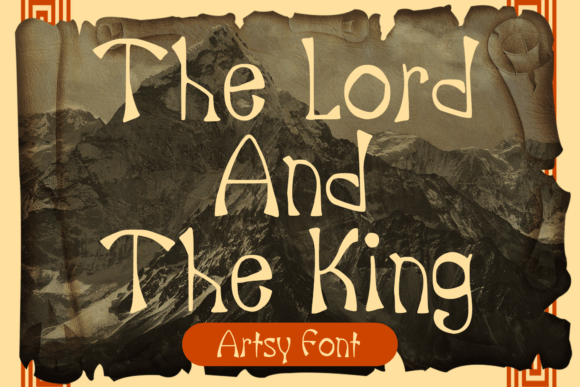
The Lord and the King: A Medieval Display Font for Modern Creators
In a digital landscape often dominated by sleek sans-serifs and minimalist geometric shapes, there is a growing hunger for typography that tells a story. The Lord and the King answers this call as a medieval display font inspired by the grandeur of epic high fantasy movies and the rich history of the Middle Ages. It is not merely a collection of letters; it is a design tool that bridges the gap between ancient craftsmanship and contemporary creative workflows. Whether you are designing a t-shirt for a gaming convention, crafting the cover of an independent novel, or creating greeting cards with a touch of whimsy, this typeface offers a versatile style that allows creators to build visually compelling narratives.
The resurgence of interest in historical aesthetics is more than just a passing trend; it reflects a deeper desire for authenticity and character in visual communication. As audiences become increasingly saturated with generic, algorithmically generated content, they gravitate toward designs that feel hand-crafted and intentional. The Lord and the King fits perfectly into this shifting paradigm, providing professionals and hobbyists alike with a resource that feels both timeless and fresh.
The Evolution of Fantasy Typography in Design
To understand the relevance of The Lord and the King, one must look at how typography has evolved within the creative industries over the last decade. Historically, medieval-style fonts were often reserved strictly for niche markets: role-playing game manuals, historical reenactment flyers, or low-budget fantasy book covers. These early iterations frequently suffered from poor kerning, inconsistent stroke weights, and limited character sets, making them difficult to use in professional settings.
However, the modern era of digital design has transformed these limitations. Today's expectations for user experience and visual quality demand fonts that are not only aesthetically pleasing but also technically robust. The evolution of tools like Adobe Creative Cloud, Canva, and various web-based design platforms has made high-quality display fonts accessible to a broader audience. This shift has allowed typefaces like The Lord and the King to move beyond their traditional constraints. They are now engineered with attention to detail, ensuring that every glyph carries the weight of its inspiration while remaining legible and functional in modern layouts.
This evolution mirrors a broader cultural shift where the "fantasy" genre has moved from the fringes to the mainstream. With the massive success of high-budget film franchises and streaming series set in fictional kingdoms, the visual language of the Middle Ages has been reimagined for a global audience. Creators are no longer looking for fonts that simply say "old"; they are looking for fonts that evoke specific emotions—heroism, mystery, adventure, and nostalgia. The Lord and the King captures this essence, offering a style that resonates with the epic scale of modern storytelling while remaining grounded enough for everyday applications.
Bridging the Gap Between Epic and Casual
One of the most compelling aspects of this typeface is its ability to balance the dramatic with the casual. While it draws heavy inspiration from the ornate lettering found on castle gates and royal decrees, its execution avoids becoming overly cluttered or illegible. This versatility is crucial for today's multi-faceted designers who need assets that can adapt to various contexts without losing their identity.
Consider the application of The Lord and the King in different scenarios. In a high-stakes environment like a book cover design, the font commands attention, instantly signaling to the reader that they are about to embark on a journey. The sharp serifs and bold strokes mimic the chiseled stone of a fortress, creating a sense of permanence and authority. Yet, when applied to a sticker or a casual greeting card, the same font takes on a lighter, more playful tone. It suggests a love for lore and history without feeling pretentious. This duality makes it an invaluable asset for entrepreneurs and marketers who need to maintain brand consistency across diverse media channels.
Practical Applications for Professionals and Hobbyists
The utility of The Lord and the King extends far beyond theoretical appreciation. For professionals in the graphic design industry, having a reliable medieval display font in their toolkit streamlines the workflow significantly. Instead of spending hours modifying standard serif fonts to achieve a gothic or fantasy look, designers can implement this typeface immediately, knowing it will deliver a polished result. This efficiency is particularly valuable in fast-paced environments where deadlines are tight and client expectations are high.
- T-Shirt and Apparel Design: The fashion industry continues to see a surge in graphic tees featuring pop culture references and fantasy themes. Using The Lord and the King for slogans or band names on merchandise creates an immediate visual impact. The font's distinct shape ensures readability even when printed on fabric, maintaining clarity despite the texture of the material.
- Book Covers and Editorial Design: For authors and publishers, the right title treatment can make or break a sale. This font is ideal for self-published authors in the fantasy, historical fiction, and paranormal romance genres. It provides a professional finish that rivals big-publishing houses, helping indie creators compete in a crowded marketplace.
- Greeting Cards and Stationery: There is a market for personalized stationery that stands out from the generic options available in big-box stores. Using this font for wedding invitations, birthday cards, or holiday greetings adds a layer of elegance and uniqueness. It transforms a simple message into a keepsake.
- Stickers and Posters: In the world of street art and promotional materials, stickers and posters serve as vital communication tools. The bold nature of The Lord and the King ensures that designs remain visible from a distance, making it perfect for event promotion or brand awareness campaigns.
For hobbyists and freelancers, the accessibility of such a font lowers the barrier to entry for high-quality design. It empowers individuals to create professional-grade assets without needing extensive training in typography. This democratization of design tools aligns with the current trend of the "creator economy," where individuals are expected to wear multiple hats and produce content that looks as good as it performs.
Integrating Historical Aesthetics into Modern Workflows
Incorporating a font like The Lord and the King into a modern design workflow requires a thoughtful approach to pairing and layout. While the font itself is striking, it works best when balanced with simpler elements. A common mistake is to pair a highly decorative display font with another equally complex typeface, which can lead to visual chaos. Instead, designers should consider using clean, neutral sans-serifs for body text to allow the headline to shine.
Furthermore, the integration of this font into digital platforms requires attention to rendering. On screens, especially mobile devices, the intricate details of medieval-inspired lettering can sometimes get lost if the resolution is too low. However, modern vector formats ensure that The Lord and the King scales beautifully across all devices, from desktop monitors to smartphone screens. This technical reliability is essential for businesses that rely on digital marketing and social media engagement.
The changing habits of consumers also play a role in how this font is utilized. Audiences today are more visually literate than ever before. They can distinguish between a well-executed design and a lazy attempt at a theme. By choosing a font that respects the nuances of its historical inspiration, creators demonstrate a level of care and expertise that builds trust with their audience. It signals that the brand or project values quality and attention to detail.
Strategic Recommendations for Implementation
When deciding to use The Lord and the King in your next project, consider the following strategic recommendations to maximize its impact:
- Context Matters: Ensure the font aligns with the overall tone of your project. If your brand is ultra-modern and tech-focused, this font might be better suited for a specific campaign rather than your primary logo.
- Whitespace is Key: Because the font is decorative, give it room to breathe. Avoid crowding the letters with other graphical elements. Let the typography be the focal point.
- Color Palette: Pair the font with colors that enhance its medieval roots. Deep reds, golds, forest greens, and slate grays work exceptionally well, but do not be afraid to experiment with modern color combinations to create a unique juxtaposition.
- Legibility Checks: Always test your design at various sizes. What looks great on a large poster might become unreadable on a small business card. Adjust spacing and size accordingly.
Ultimately, The Lord and the King represents more than just a stylistic choice; it is a tool for storytelling. In a world where digital interactions can often feel cold and impersonal, bringing the warmth and drama of historical aesthetics into modern design helps humanize brands and connect with audiences on an emotional level. Whether you are a seasoned designer or a curious creator, falling in love with its incredibly versatile style opens up a world of possibilities. Use it to create lovely designs that stand the test of time, blending the epic spirit of the past with the innovative potential of the future.