Denjiro: A Practical Evaluation of a Casual Sans Display Font
In the crowded landscape of digital typography, finding a typeface that balances personality with readability is often a challenge. Many display fonts lean too heavily into quirkiness, sacrificing legibility, while standard sans-serifs can feel sterile and impersonal. Denjiro occupies a distinct middle ground, offering a fun and casual aesthetic without descending into illegibility. As a sans display font that radiates a carefree spirit, it has garnered attention from designers looking to inject warmth into their projects. This evaluation examines the practical application, design characteristics, and real-world utility of Denjiro for professionals ranging from marketers to small business owners.
Design Philosophy and Visual Characteristics
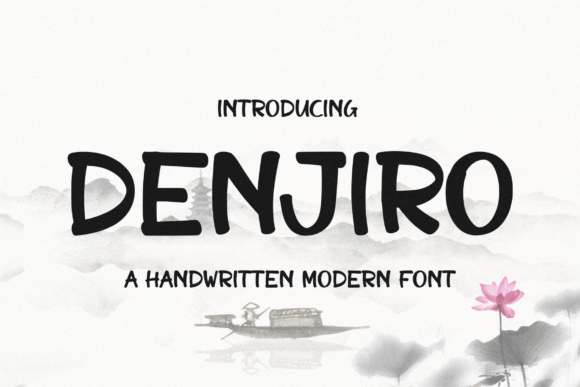
At its core, Denjiro is defined by its friendly letterforms and approachable style. Unlike geometric sans-serifs that prioritize mathematical precision, Denjiro embraces organic curves and varying stroke weights that mimic hand-drawn elements while maintaining the structural integrity of a digital font. The "carefree spirit" mentioned in its description is not merely a marketing tagline but a result of specific typographic choices. The rounded terminals and open apertures create a sense of openness and accessibility, making the text feel inviting rather than authoritative.
For designers, the visual rhythm of Denjiro is crucial. It avoids the uniformity that often plagues display fonts, introducing subtle variations that prevent the text from feeling robotic. However, these variations are controlled enough to ensure consistency across different sizes. When evaluating the font's geometry, one notices that the x-height is generous, which aids in readability even at smaller point sizes—a common pitfall for many display typefaces. This balance between playful character and functional structure is what makes Denjiro worth discussing in professional circles.
Practical Applications in Branding and Marketing
The primary strength of Denjiro lies in its ability to convey a relaxed and joyful aesthetic. In the context of branding, this makes it an excellent choice for industries that prioritize connection and community over corporate rigidity. Consider a local coffee shop, a children's educational app, or a wellness blog; these sectors benefit significantly from a typeface that feels human and unpretentious. By integrating Denjiro into their visual identity, brands can signal to their audience that they are approachable and grounded.
Marketers and entrepreneurs often struggle to find fonts that work well in both headlines and subheadings without losing impact. Denjiro performs admirably as a headline font, grabbing attention through its distinctive shape. Its lighthearted charm allows it to stand out in a sea of bold, aggressive sans-serifs commonly used in advertising. For instance, in social media graphics where engagement is key, Denjiro can soften the tone of promotional content, making calls to action feel more like invitations than demands.
- Social Media Campaigns: Ideal for captions and overlay text on images where a conversational tone is required.
- Packaging Design: Works well for products targeting families or lifestyle consumers who value authenticity.
- Event Invitations: Perfect for workshops, festivals, and community gatherings that aim to foster a welcoming atmosphere.
Usability and Technical Performance
Beyond aesthetics, the technical execution of a font determines its long-term value. From a usability standpoint, Denjiro demonstrates reliability across various platforms. Its file structure is optimized for web and print use, ensuring that the intended weight and curvature render correctly regardless of the device. For freelancers and publishers who manage multiple projects, this consistency reduces the time spent troubleshooting rendering issues.
One of the critical factors in font selection is flexibility. While Denjiro is primarily a display font, its design allows for some versatility. It pairs exceptionally well with neutral serif or simple sans-serif body fonts, creating a hierarchy that guides the reader's eye effectively. However, users should be mindful of its limitations. Because of its expressive nature, Denjiro is not suited for large blocks of body text. Using it for paragraphs longer than a few lines can lead to visual fatigue and reduced comprehension. Professional observation suggests reserving Denjiro for titles, pull quotes, and short, impactful statements.
Furthermore, the font's performance in multilingual contexts depends on the specific character set included in the license. For international projects, verifying glyph coverage is essential. If a project requires extensive diacritics or non-Latin scripts, users must confirm compatibility before committing to the font. This due diligence ensures that the font remains a reliable asset throughout the lifecycle of a project.
Quality and Consistency in Presentation
When analyzing the quality of Denjiro, the attention to detail in the kerning and spacing stands out. Poorly spaced letters can ruin the impact of even the most beautiful typeface, but Denjiro maintains a comfortable rhythm that supports its friendly persona. The spacing is tight enough to keep words cohesive yet loose enough to prevent crowding, which is vital for maintaining the "easygoing flair" associated with the font.
Consistency is another area where Denjiro excels. Whether used in a high-resolution print brochure or a low-resolution mobile ad, the letterforms retain their definition. This scalability is a testament to the robustness of the vector outlines. For educators and creators producing materials for diverse audiences, knowing that the font will look professional on any medium provides peace of mind and streamlines the production workflow.
Audience Fit and Strategic Recommendations
Who benefits most from using Denjiro? The font is particularly well-suited for adults aged 20–50 who are involved in creative fields requiring a touch of humanity. Entrepreneurs launching lifestyle brands, bloggers focusing on personal development, and small business owners aiming to build local community trust will find Denjiro aligns well with their goals. It speaks the language of modern consumerism, where authenticity and emotional resonance often drive purchasing decisions more than traditional authority.
However, it is not a universal solution. Professionals in legal, financial, or heavy industrial sectors may find the font too informal for their needs. In these contexts, the carefree spirit of Denjiro could inadvertently undermine the perception of seriousness and expertise. Therefore, strategic implementation is key. Before adopting Denjiro, creators should ask themselves if the brand voice they wish to project matches the font's inherent personality.
- Assess Brand Voice: Does your brand speak casually and warmly? If yes, Denjiro is a strong candidate.
- Test Readability: Always mock up the font in the actual environment where it will be used to check contrast and size.
- Pair Wisely: Combine Denjiro with a highly legible, neutral font for body copy to maintain professional standards.
- Consider Longevity: While trends change, Denjiro's classic rounded sans-serif roots suggest it will remain relevant for years.
Conclusion on Value and Effectiveness
In summary, Denjiro offers a delightful and easygoing flair that addresses a specific need in the design ecosystem: the requirement for a display font that feels human without compromising on clarity. Its friendly letterforms and approachable style make it a valuable tool for projects demanding a relaxed and joyful aesthetic. While it has limitations regarding body text usage, its strengths in headlines, branding, and short-form content are significant.
For serious hobbyists, freelancers, and business owners, Denjiro represents a practical investment in visual communication. It allows for creative expression that resonates emotionally with audiences, fostering a connection that rigid typefaces often fail to achieve. By understanding its strengths and applying it within appropriate contexts, designers can leverage Denjiro to enhance their work with a touch of genuine charm. Ultimately, the effectiveness of Denjiro lies not just in how it looks, but in how it makes the viewer feel—invited, understood, and at ease.