Jihan: The Handwritten Font That Brings Personality to Modern Design
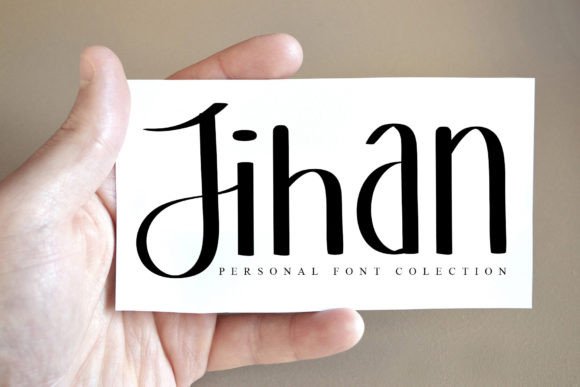
In a digital landscape increasingly dominated by sleek, geometric sans-serifs and rigid grid systems, there is a growing hunger for imperfection. We are seeing a shift where audiences crave authenticity, warmth, and the unmistakable touch of the human hand. This is where Jihan steps in. Jihan is not just another typeface; it is a fun and quirky handwritten font designed to break the monotony of corporate minimalism. No matter the topic, this font will be an incredible asset to your fonts’ library, as it has the potential to elevate any creation from a standard document to a memorable experience.
The rise of Jihan reflects a broader cultural movement toward "digital humanism." As screens become our primary interface for work, social connection, and commerce, the sterile nature of default system fonts can feel impersonal. Designers and content creators are actively seeking tools that inject soul into their projects. Jihan answers this call with its irregular strokes, playful curves, and organic rhythm, mimicking the natural flow of pen on paper while maintaining the legibility required for modern communication.
The Evolution of Digital Typography and the Return of the Handwritten
To understand why a font like Jihan matters now, we must look at how typography has evolved over the last two decades. The early 2000s were defined by the pursuit of pixel-perfect clarity and the dominance of the "corporate Memphis" aesthetic—clean, neutral, and often indistinguishable from one brand to the next. While efficiency was the goal, the result was often a visual homogeneity that made it difficult for individual voices to stand out.
However, current trends suggest a pivot. The design world is embracing "brutalism," maximalism, and, most notably, the imperfect. Users today have developed a sophisticated eye for design; they can instantly distinguish between a mass-produced template and something crafted with intention. Handwritten fonts have transitioned from being relegated to casual invitations or children's book covers to becoming powerful tools in branding, marketing, and user interface design.
Jihan fits perfectly into this evolution. It represents a bridge between the analog past and the digital future. Unlike earlier attempts at digital handwriting which often looked stiff or artificially generated, Jihan captures the kinetic energy of actual writing. It acknowledges that people write differently depending on their mood, speed, and pressure. By incorporating these subtle variations, Jihan creates a sense of intimacy that static, machine-generated fonts simply cannot replicate.
Why Authenticity Drives Engagement in 2024
The relevance of Jihan extends beyond aesthetics; it touches on psychology. In an era of AI-generated content and algorithmic curation, the human element is the ultimate differentiator. When a reader encounters text set in Jihan, they subconsciously register it as personal, direct, and unfiltered. This triggers a psychological response associated with trust and connection.
For businesses, this is a critical advantage. A logo or headline in a generic font might convey professionalism, but it rarely conveys passion. Conversely, using Jihan for key messaging can signal approachability and creativity. It suggests that the brand behind the message is run by real people who care enough to add a personal touch. Whether you are a freelance graphic designer pitching a proposal or a small business owner designing a flyer, the choice of typeface sets the tone before a single word is read.
Practical Applications for Creators and Professionals
While the emotional appeal of Jihan is clear, its utility in practical workflows is equally impressive. Many designers hesitate to use handwritten fonts due to concerns about legibility or appropriateness. However, Jihan is engineered to be versatile, making it suitable for a wide range of applications without sacrificing readability.
- Brand Identity and Logos: Startups and creative agencies are increasingly adopting handwritten elements in their logos to appear more agile and human-centric. Jihan works exceptionally well here, offering a unique identifier that stands out against the sea of blocky icons and serif marks.
- Social Media Graphics: On platforms like Instagram and TikTok, attention spans are measured in seconds. Bold, quirky headlines set in Jihan can stop the scroll. The font's natural variability ensures that each post feels fresh and distinct, avoiding the repetitive look of automated templates.
- Web Design and UI: Modern websites are moving away from dense blocks of text. Using Jihan for pull quotes, call-to-action buttons, or section headers adds visual hierarchy and breaks up the rigidity of the layout. It guides the user's eye naturally through the content.
- Print Materials: From wedding invitations to coffee shop menus, print media still holds significant value. Jihan brings a tactile quality to printed pieces, evoking the feeling of a note passed across a table or a recipe written in a grandmother's journal.
Consider the workflow of a content marketer. They might spend hours crafting a blog post, only to have it get lost in a feed of similar articles. By applying Jihan to the featured image or the introductory hook, they immediately create a visual signature. It transforms the content from "information" into "storytelling."
Balancing Quirkiness with Professionalism
A common misconception is that handwritten fonts are too informal for serious business contexts. This is where the specific character of Jihan becomes vital. Its design strikes a balance; it is quirky enough to be engaging but structured enough to remain professional. The key lies in pairing.
When used alongside a clean, neutral sans-serif or a classic serif body font, Jihan acts as a dynamic accent rather than an overwhelming force. For instance, a financial advisor might use a traditional serif for their report body but employ Jihan for client newsletters or personalized notes within the document. This juxtaposition signals that while the data is rigorous, the service is personal. It allows professionals to maintain authority while demonstrating empathy and creativity.
Adapting to Changing User Expectations and Market Preferences
Market preferences are shifting rapidly, driven by a generation of consumers who value transparency and individuality. The "perfect" brand is no longer the ideal; the "authentic" brand is. People want to see the flaws, the personality, and the humanity behind the products they buy and the services they use.
This shift impacts how brands communicate visually. A monolithic, uniform visual identity can sometimes feel cold or distant. Brands that incorporate elements like Jihan into their visual language are signaling that they are adaptable and responsive. They are saying, "We are not a faceless corporation; we are a community of individuals."
Furthermore, the rise of remote work and digital collaboration has changed how we interact with documents and presentations. In a virtual meeting, a slide deck filled with bullet points in Arial can induce sleep. Introducing Jihan into presentation titles or key takeaways injects energy into the room. It keeps the audience engaged and makes the presenter appear more relatable and confident.
The Role of Technology in Preserving Character
Technology has also played a role in the resurgence of fonts like Jihan. Modern variable fonts and advanced rendering engines allow for smoother display of complex scripts on all devices, from high-resolution desktop monitors to mobile screens. This means that the intricate details of a handwritten font do not get lost in translation.
Designers no longer have to choose between the artistic flair of a custom illustration and the scalability of digital type. Jihan offers the best of both worlds. It is a scalable vector font that retains the charm of a sketch. This technological capability ensures that whether a user is viewing a website on a phone or printing a large banner, the integrity of the font remains intact.
Strategic Recommendations for Implementing Jihan
Integrating Jihan into your design toolkit requires a strategic approach to ensure it enhances rather than distracts. Here are some practical recommendations for maximizing its impact:
- Use Sparingly for Impact: Because Jihan is expressive, it should generally be reserved for headlines, short phrases, or emphasis. Long paragraphs in a handwritten style can strain the reader's eyes. Let Jihan lead the way, then switch to a highly readable body font for the details.
- Experiment with Color and Texture: Handwritten fonts thrive when paired with rich colors and textured backgrounds. Try using Jihan on watercolor washes, grainy paper textures, or bold, vibrant gradients to amplify its organic feel.
- Pair with Contrasting Styles: To create a balanced composition, pair Jihan with a font that has strong structural contrast. A heavy geometric sans-serif or a delicate serif can provide the necessary stability to let Jihan shine without overwhelming the layout.
- Test Across Devices: Always preview your designs on multiple screen sizes. Ensure that the quirks of Jihan render clearly on mobile devices, where screen space is limited and readability is paramount.
Ultimately, the decision to use Jihan is a decision to prioritize connection over conformity. It is an acknowledgment that in a world of algorithms, the human touch is the most valuable asset we have. By incorporating this fun and quirky handwritten font into your projects, you are not just choosing a typeface; you are choosing a voice.
Whether you are building a new brand, refreshing an existing portfolio, or simply looking to add a spark of joy to your daily communications, Jihan offers a versatile solution. It proves that good design does not have to be cold or clinical. It can be warm, inviting, and distinctly human. As we move forward into a future where digital interactions continue to dominate our lives, tools like Jihan will become essential for those who wish to keep the conversation real.