Rigid Core: A Strategic Approach to Bold Typography in Modern Workflows
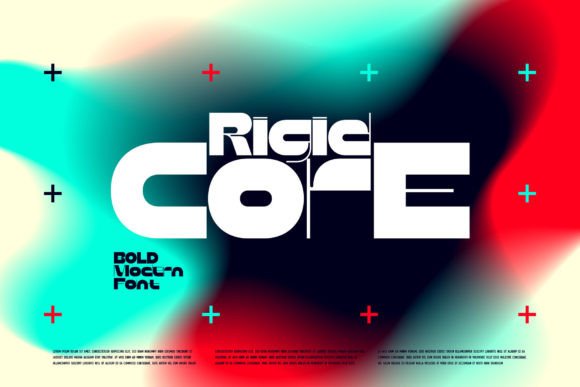
In the landscape of digital and print design, the choice of typeface often dictates the success of a visual communication strategy. Rigid Core is a strikingly bold display font designed to command attention. Its strong, geometric shapes and defined lines evoke a sense of power and solidity. While many designers focus on body text for readability, the strategic implementation of a headline font like Rigid Core can transform a project's impact from passive observation to active engagement. For professionals ranging from brand managers to freelance creatives, understanding where and how to deploy such a distinct typographic asset is essential for maintaining consistency and authority across various platforms.
The integration of Rigid Core into a workflow is not merely an aesthetic decision; it is a structural one. It serves as the anchor for visual hierarchies, guiding the viewer's eye and establishing the tone before a single word of content is read. Whether you are launching a new product, redesigning a corporate identity, or creating marketing collateral, the process of selecting and applying this font requires careful planning to ensure it complements your broader design ecosystem rather than overwhelming it.
Defining the Role of Rigid Core in Visual Strategy
Before integrating Rigid Core into any project, it is crucial to understand its specific function within the design process. As a display font, it is not intended for long-form reading. Instead, it excels in short, punchy statements where clarity and impact are paramount. The geometric nature of its characters provides a modern, industrial feel that resonates well with audiences seeking reliability and strength. This makes it particularly effective for headlines, posters, and branding projects where the goal is to exude confidence and modernity.
When planning a visual identity, Rigid Core should be viewed as the primary voice of authority. In a typical design workflow, this selection happens during the conceptual phase, alongside the definition of color palettes and imagery styles. By deciding early on that Rigid Core will serve as the headline element, designers can streamline subsequent decisions regarding layout and spacing. Its defined lines require generous whitespace to breathe, a factor that must be accounted for when sketching initial wireframes or mood boards. Ignoring this spatial requirement can lead to cluttered compositions that diminish the font's inherent power.
Integrating Rigid Core into Project Phases
The utility of Rigid Core extends throughout the lifecycle of a creative project, offering distinct advantages at different stages of execution. During the pre-production phase, using Rigid Core in mockups helps stakeholders visualize the final brand voice. It acts as a placeholder for the "attitude" of the project, allowing teams to assess whether the boldness aligns with their business goals before committing to full-scale production.
Once the project moves into the execution phase, Rigid Core becomes a critical tool for differentiation. In a crowded market, generic typography blends into the background. By deploying Rigid Core for key messaging, brands can cut through the noise. For instance, a small business owner creating a promotional poster can use this font to highlight a limited-time offer or a core value proposition. The geometric shapes draw the eye immediately, ensuring the message is received instantly. This efficiency is vital in fast-paced environments where seconds determine user engagement.
Post-project, Rigid Core plays a role in quality control and brand consistency. As assets are distributed across various channels—from social media graphics to physical signage—the font ensures a unified look. Checking that the kerning and scaling remain consistent across these different mediums is part of the final review process. Because Rigid Core relies on strong lines, inconsistencies in rendering or low-resolution exports can degrade its appearance. Therefore, verifying file formats and export settings is a necessary step to maintain the font's integrity over time.
Workflow Integration and Tool Compatibility
Successful implementation of Rigid Core depends heavily on how it interacts with other tools and resources within a designer's toolkit. Most modern design software, including Adobe Illustrator, Photoshop, and Figma, supports custom font installation seamlessly. However, the true challenge lies in pairing Rigid Core with complementary elements. A common workflow involves selecting a neutral, highly legible sans-serif for body text to contrast with the boldness of the display font. This pairing creates a balanced hierarchy where Rigid Core commands the top level without competing with the informational content below.
For teams collaborating remotely, version control and font licensing are practical considerations. Ensuring that all team members have access to the same version of Rigid Core prevents rendering discrepancies that can occur when fonts are substituted automatically. In cloud-based workflows, embedding the font correctly in shared files or exporting designs as vector PDFs ensures that the geometric precision of the characters is preserved regardless of the viewing device.
Furthermore, Rigid Core interacts dynamically with other design assets. When paired with high-contrast photography or minimalist iconography, the font enhances the overall modernity of the piece. Conversely, pairing it with overly ornate scripts or complex textures can create visual friction. Designers should test these combinations early in the process. Creating a style guide that specifies exactly how Rigid Core should be used—including minimum sizes, weight variations, and acceptable pairings—can save significant time during the execution phase and reduce revision cycles.
Practical Implementation Tips for Professionals
To maximize the effectiveness of Rigid Core, professionals should adopt a few practical strategies focused on usability and organization. First, establish clear guidelines for sizing. Because the font is bold, it can easily dominate a layout if scaled too large. Using a modular grid system helps determine appropriate heading sizes relative to the page dimensions. Second, pay close attention to line height and letter spacing. The tight geometry of Rigid Core benefits from slightly increased tracking in uppercase applications to improve legibility and prevent the letters from merging visually.
Another valuable observation is the versatility of Rigid Core in motion graphics. Its solid shapes translate well to animation, making it suitable for video intros, lower thirds, and kinetic typography. When animating, the defined edges allow for clean transformations and reveals. This expands the font's utility beyond static print and web design into the realm of multimedia storytelling.
For entrepreneurs and marketers, the cost-benefit analysis of adopting a premium display font like Rigid Core often favors investment. A unique, professional look builds trust and perceived value. Rather than relying on default system fonts, investing in a distinctive typeface signals that the brand has put thought into its presentation. This attention to detail can influence consumer perception and drive conversion rates in competitive sectors.
Ensuring Long-Term Consistency and Quality
Sustaining the impact of Rigid Core over the long term requires discipline in brand management. As a company grows, the temptation to experiment with new styles can dilute the established identity. Regular audits of marketing materials help ensure that Rigid Core remains the standard for headlines and that its usage adheres to the original design intent. This includes checking that the font is not being stretched, skewed, or distorted in ways that compromise its geometric integrity.
Efficiency in the creative process is also maintained by building reusable templates. Once the optimal settings for Rigid Core are determined for specific deliverables—such as email headers, slide decks, or social media banners—these can be saved as master templates. This reduces the time spent on repetitive tasks and ensures that every output maintains the same level of polish and authority. By treating the font as a core component of the operational workflow rather than just a decorative element, organizations can achieve a higher degree of visual cohesion.
Ultimately, Rigid Core is more than a collection of shapes; it is a strategic asset that communicates strength and modernity. By understanding its capabilities and integrating it thoughtfully into the planning, execution, and maintenance phases of a project, professionals can leverage its bold character to make every message stand out with authority and style. Whether for a startup looking to make a mark or an established firm refreshing its image, the disciplined application of this font can yield significant returns in terms of brand recognition and audience engagement.