Dextor: A Strategic Approach to Experimental Typography
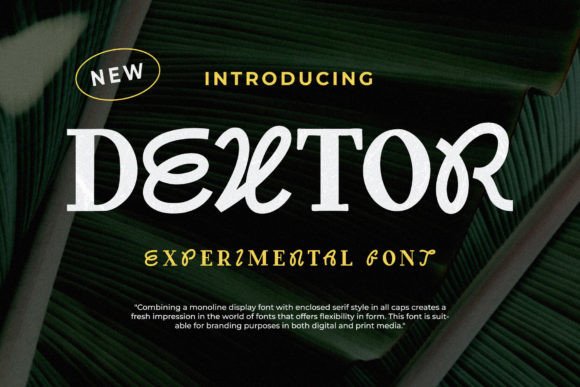
In the crowded landscape of digital and print media, visual differentiation is no longer a luxury; it is a necessity for survival. Entrepreneurs, marketers, and brand strategists understand that the first interaction a consumer has with a business often occurs through typography. This is where Dextor emerges not merely as a font, but as a strategic tool for communication. Dextor represents a significant shift in typographic design, marrying the refined elegance of serifs in lowercase with the bold, expressive energy of display script in uppercase. This unique duality allows brands to project stability and approachability simultaneously, creating a visual language that speaks directly to modern audiences seeking both reliability and creativity.
The decision to adopt a typeface like Dextor should never be aesthetic alone. It must be rooted in a clear understanding of brand positioning and long-term communication goals. When used intentionally, Dextor can elevate a brand's perceived value, clarify its message, and foster a deeper emotional connection with its audience. However, without a strategic framework, even the most innovative typeface can lead to confusion or dilution of brand identity. The following analysis explores how to leverage Dextor effectively within your broader operational and creative strategy.
The Strategic Value of Dual-Weight Typography
Typography serves as the voice of a brand's written content. Traditional typefaces often force a choice between readability (serifs/sans-serifs) and expression (scripts/displays). Dextor disrupts this binary by integrating these opposing forces into a single cohesive system. The lowercase characters, grounded in serif tradition, provide the necessary legibility for body text, ensuring that complex information is conveyed clearly. Conversely, the uppercase characters, rendered in a bold display script, offer an immediate hook for headlines, logos, and calls to action.
For decision-makers, this hybrid structure offers distinct advantages in planning and execution:
- Brand Differentiation: In saturated markets, standing out requires breaking patterns. Dextor's juxtaposition of styles creates a memorable visual signature that competitors using standard fonts cannot easily replicate.
- Tone Modulation: The ability to switch between the calm authority of lowercase serifs and the dynamic energy of uppercase scripts allows for nuanced storytelling within a single document or campaign.
- Visual Hierarchy: The inherent contrast between the two case styles naturally guides the reader's eye, reducing the cognitive load required to scan content and improving overall information retention.
By adopting Dextor, organizations signal that they are forward-thinking yet respectful of tradition. This balance is particularly effective for industries such as tech startups, creative agencies, boutique consulting firms, and lifestyle brands that need to appear both innovative and trustworthy.
Aligning Dextor with Business Objectives
Before integrating Dextor into any design system, it is crucial to align its characteristics with specific business objectives. A typeface is a functional asset that supports operations, marketing, and customer experience. Consider the following strategic applications:
Enhancing Brand Positioning
If your goal is to position your company as a leader in innovation while maintaining professional credibility, Dextor is an ideal candidate. The uppercase script elements suggest boundless creativity and boldness, appealing to early adopters and trend-conscious consumers. Simultaneously, the serif lowercase grounds the brand, reassuring stakeholders of operational competence. This combination is particularly powerful for rebranding initiatives where a company seeks to shed a "stodgy" image without losing its established reputation for quality.
Optimizing Customer Experience
Effective communication reduces friction in the customer journey. Dextor's high contrast aids in rapid scanning, which is essential for mobile interfaces and social media ads where attention spans are short. By using the bold uppercase for key metrics, offers, or headlines, you ensure that the most critical information is captured immediately. The readable lowercase ensures that the supporting details—terms, descriptions, and narratives—are consumed without strain. This thoughtful application directly impacts conversion rates and user satisfaction.
Supporting Content Strategy
For bloggers, publishers, and educators, content clarity is paramount. Dextor allows for a more engaging presentation of educational materials or thought leadership articles. The script uppercase can highlight key concepts or chapter titles, making the content feel less rigid and more inviting. This can increase time-on-page and encourage deeper engagement with the material, ultimately driving better learning outcomes or higher ad revenue.
Practical Implementation and Planning
Integrating Dextor into your workflow requires a methodical approach. Random application of experimental typography can lead to visual chaos, undermining the very professionalism the font aims to enhance. Here is a practical guide to implementing Dextor effectively:
- Define Usage Scenarios: Map out exactly where Dextor will appear. Will it be used exclusively for branding assets, or will it extend to web UI and print collateral? Limiting initial use to high-impact areas like logos and hero sections allows you to gauge audience reaction before full-scale deployment.
- Establish Pairing Rules: While Dextor is self-contained, it may need to work alongside other fonts in complex documents. Define strict guidelines on when to use Dextor versus secondary typefaces to maintain consistency across all touchpoints.
- Test for Legibility: Conduct rigorous testing at various sizes and on different devices. Ensure that the intricate details of the script uppercase remain visible on small screens and that the serif lowercase does not blur at low resolutions.
- Train Your Team: Whether working with internal designers or external freelancers, ensure everyone understands the strategic intent behind Dextor. Provide style guides that explain not just how to use the font, but why it matters for the brand's goals.
Planning also involves considering the longevity of the design. Trends in typography shift, but a well-executed strategic choice remains relevant. Dextor's blend of classic and contemporary elements suggests a design that can age gracefully, provided it is used with restraint and purpose.
Risks and Considerations
Despite its potential, Dextor is not a universal solution. There are significant risks associated with deploying experimental typography without clear context. The primary danger lies in misalignment with industry expectations. For instance, in highly regulated sectors like finance or healthcare, excessive stylization in uppercase headers might be perceived as unprofessional or distracting, potentially eroding trust.
Furthermore, overuse can lead to visual fatigue. If every headline, button, and label utilizes the bold script style, the impact diminishes, and the design becomes noisy rather than striking. The power of Dextor lies in its contrast; if that contrast is diluted by indiscriminate application, the font loses its strategic value.
Another consideration is accessibility. While the serif lowercase is generally legible, the display script uppercase may present challenges for users with visual impairments or dyslexia. It is essential to evaluate color contrast ratios and character spacing to ensure compliance with accessibility standards. A commitment to inclusivity strengthens brand reputation and expands market reach.
Decision-Making Framework for Typography
To determine if Dextor is the right choice for your organization, apply a simple decision-making framework based on your current goals:
- Do you need to disrupt? If your market is stagnant and you need to capture attention quickly, Dextor's experimental nature is a strong asset.
- Is your brand narrative complex? If you need to convey multiple facets of your personality (e.g., serious yet playful), the dual-weight structure of Dextor supports this complexity better than monolithic fonts.
- Are you scaling your visual identity? As businesses grow, their visual systems must adapt. Dextor offers the flexibility to scale from a simple logo to a comprehensive multi-channel campaign without losing coherence.
Conversely, if your primary objective is pure utility with zero emphasis on brand personality, or if your target demographic strictly prefers traditional, conservative aesthetics, a standard sans-serif or serif family might be more appropriate. The choice of typeface is a reflection of strategic priorities.
Long-Term Value and Creative Evolution
The true measure of a strategic design decision is its long-term value. Dextor is designed to inspire boundless creativity, but that inspiration must be channeled into results. By fostering a culture where typography is viewed as a core component of business strategy, organizations can achieve sustained competitive advantage.
As your brand evolves, so too can your use of Dextor. The font's versatility allows for seasonal variations, campaign-specific adaptations, and iterative improvements without requiring a complete overhaul of the visual identity. This adaptability ensures that your brand remains fresh and relevant in a rapidly changing digital environment.
Ultimately, the introduction of Dextor is an invitation to rethink how visual language influences decision-making. It challenges creators and leaders to move beyond safe choices and embrace designs that reflect the dynamic nature of modern business. When approached with intention, discipline, and a clear understanding of strategic goals, Dextor becomes more than just a font—it becomes a catalyst for growth, clarity, and enduring brand success.