Beyond the Grid: How Polhan Bridges Modern Minimalism and Playful Character
In the rapidly evolving landscape of digital design, typography serves as more than just a vehicle for text; it is the primary architect of brand voice and user emotion. As professionals navigate a saturated market where attention spans are fleeting, the need for typefaces that balance structural integrity with emotional resonance has never been greater. Enter Polhan, a typeface that defies the binary choice between sterile corporate minimalism and chaotic decorative scripts. By combining a modern sans-serif foundation with a playful touch, Polhan emerges as a strategic asset for designers seeking to inject personality without sacrificing legibility.
The contemporary creative industry is witnessing a significant shift away from the rigid uniformity of the early 2010s. While clean lines remain essential, there is a growing demand for fonts that feel human, approachable, and dynamic. Polhan fits squarely into this movement, offering a solution that addresses the changing expectations of consumers who crave authenticity in their digital interactions. This article explores why Polhan is capturing the attention of entrepreneurs, marketers, and creatives alike, and how its unique characteristics align with broader trends in technology, lifestyle, and business communication.
The Anatomy of a Hybrid Typeface
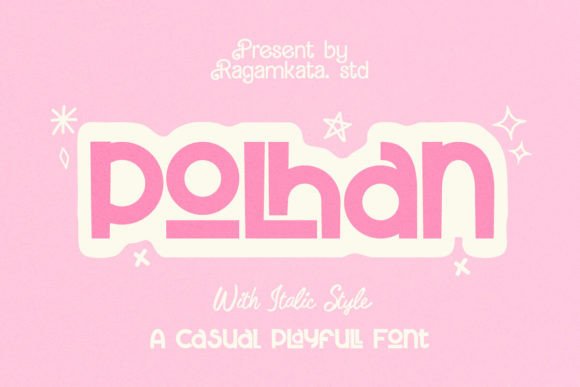
To understand the impact of Polhan, one must first examine its construction. At its core, Polhan is a typeface that combines a modern sans-serif with a playful touch, making it the perfect choice for various creative projects. Unlike traditional grotesque sans-serifs that prioritize neutrality above all else, Polhan introduces subtle variations in stroke weight and curvature that suggest movement and energy. These elements are not merely decorative; they are carefully calibrated to maintain the font's functional utility while enhancing its aesthetic appeal.
With clean and simple letterforms yet retaining playful elements, this font brings a cheerful and dynamic vibe to every design. The geometry of the characters is grounded in mathematical precision, ensuring that the type remains highly readable across different screen sizes and resolutions. However, the terminal ends of certain letters or the slight asymmetry in curves introduce a sense of whimsy. This duality allows Polhan to function effectively in high-stakes environments, such as financial dashboards or tech startups, while simultaneously feeling warm and inviting enough for lifestyle brands and educational platforms.
Why Designers Are Turning to Polhan
The surge in interest surrounding Polhan is not accidental; it is a direct response to the evolving needs of the design community. For years, designers have struggled to find a typeface that could serve dual purposes—acting as a robust body text font while also commanding attention in headlines. Often, this required pairing two distinct typefaces, which can lead to visual dissonance if not executed perfectly. Polhan simplifies this workflow by offering a versatile family that handles both roles seamlessly.
Professionals are paying attention to Polhan because it solves a critical problem in modern branding: the need for scalability. In an era where a logo must look equally impressive on a mobile app icon, a billboard, and a social media story, consistency is key. Polhan provides a refreshing and captivating touch to your projects regardless of the medium. Its adaptability means that a single font file can carry a brand identity through complex marketing campaigns, reducing the cognitive load on design teams and streamlining production timelines.
Furthermore, the "playful" aspect of Polhan resonates with a generation of consumers who value experiences over transactions. Brands that utilize this font signal that they are innovative, approachable, and human-centric. Whether it is a fintech app trying to demystify banking for Gen Z or a sustainable fashion label aiming to convey eco-friendly optimism, Polhan acts as a visual bridge between the brand's values and the audience's emotions.
Aligning with Broader Industry Trends
The rise of Polhan cannot be viewed in isolation; it is part of a larger narrative within the creative and technology sectors. We are currently seeing a departure from the "flat design" dogma that dominated the last decade. While flat design prioritized efficiency, the current trend favors "expressive minimalism"—a style that retains simplicity but adds depth through character and motion. Polhan is perfectly positioned at the intersection of these movements.
The Humanization of Digital Interfaces
As artificial intelligence and automation become more prevalent in our daily lives, there is a counter-movement toward humanizing digital interfaces. Users are increasingly wary of cold, robotic aesthetics. They prefer designs that feel crafted and intentional. Polhan addresses this by introducing organic nuances into a digital-first format. The playful elements in the letterforms mimic the imperfections of hand-drawn art, creating a subconscious connection with the viewer.
This trend is particularly relevant in the SaaS (Software as a Service) and startup ecosystems. Entrepreneurs are looking for ways to differentiate their products in crowded markets. A standard Helvetica or Arial simply does not cut it anymore. By adopting Polhan, companies can project a brand identity that is forward-looking yet grounded. It suggests a company that is technologically advanced but still cares about the human experience behind the screen.
Adaptability in a Multi-Platform World
The fragmentation of media consumption requires typography that is inherently responsive. From the small viewport of a smartwatch to the expansive canvas of a cinematic display, text must remain clear and impactful. Polhan’s clean letterforms ensure that readability is never compromised, even at smaller point sizes. This makes it an ideal candidate for UI/UX design, where clarity is paramount.
Moreover, the versatility of Polhan extends to video content and motion graphics. The dynamic nature of the font lends itself well to animation. When used in kinetic typography, the playful curves and balanced weights create a sense of rhythm and flow that static fonts often lack. Marketers utilizing video ads or explainer videos find that Polhan enhances engagement rates by keeping the visual experience lively and unpredictable.
Practical Applications Across Industries
Suitable for titles, text, logos, and more, Polhan provides a refreshing and captivating touch to your projects across a wide array of sectors. Its application goes beyond mere aesthetics; it influences how information is perceived and processed.
- Startup Branding: For new ventures, establishing trust quickly is vital. Polhan offers a professional backbone that assures reliability, while its playful side communicates innovation and agility. It is frequently used in logo design for tech startups, allowing them to stand out against competitors using more traditional serif or slab-serif fonts.
- Educational Content: In the EdTech sector, engagement is driven by approachability. Using Polhan for course materials, e-books, and learning management systems helps reduce the intimidation factor often associated with academic content. The font invites learners in, making complex topics feel accessible and fun.
- Lifestyle and Wellness: Brands in the wellness, fitness, and travel industries rely heavily on evoking positive emotions. Polhan’s cheerful vibe aligns perfectly with messages of growth, health, and exploration. It works exceptionally well in packaging design, social media captions, and website headers for these sectors.
- Retail and E-commerce: In online retail, typography guides the user journey. Polhan can be used for call-to-action buttons, product descriptions, and promotional banners. Its legibility ensures that users can scan information quickly, while its personality encourages interaction and purchase decisions.
Workflow Efficiency for Freelancers and Agencies
For freelancers and design agencies, time is currency. The ability to use a single typeface family for multiple purposes significantly accelerates the design process. Instead of sourcing, licensing, and adjusting multiple fonts to achieve a cohesive look, designers can rely on the internal consistency of Polhan. This efficiency allows teams to focus more on strategy and creativity rather than getting bogged down in typographic minutiae.
Additionally, the semantic richness of Polhan reduces the need for extensive client education. When presenting a design concept, the font speaks for itself. Clients immediately grasp the intended tone—modern yet friendly—reducing the number of revision cycles and leading to faster project turnaround times.
The Future of Expressive Typography
Looking ahead, the trajectory of typography points toward even greater integration of emotion and functionality. As virtual reality, augmented reality, and immersive web experiences become mainstream, the role of type will evolve from passive reading material to an active component of the environment. Polhan represents a step in this direction, proving that typefaces can be both structurally sound and emotionally engaging.
The preferences of consumers are shifting toward brands that demonstrate personality and transparency. In this context, the choice of typeface is a strategic decision that reflects a company's culture. Polhan is not just a font; it is a statement of intent. It signals that a brand is ready to embrace the future while remaining connected to the human element.
As we move further into a digital-first economy, the distinction between "serious" and "fun" will continue to blur. The most successful designs will be those that can navigate this spectrum effortlessly. Polhan stands as a testament to this evolution, offering a toolkit for creators who wish to build meaningful connections in a noisy world. By embracing a typeface that combines the best of both worlds, professionals can ensure their work remains relevant, impactful, and memorable.
Ultimately, the adoption of Polhan is about more than following a trend; it is about understanding the psychology of design and meeting the audience where they are. In a world filled with generic templates and cookie-cutter solutions, choosing a font like Polhan is a commitment to quality, creativity, and the enduring power of good design.