Evaluating Litle Girl: A Practical Guide to Its Design Strengths and Limitations
In the crowded landscape of display typography, finding a font that balances whimsy with readability is often a challenge. Litle Girl has emerged as a distinct option for designers seeking a characterful, unpretentious aesthetic without sacrificing legibility entirely. This font is not merely a decorative element; it serves as a specific stylistic tool intended to inject personality into visual communications. For adults navigating design projects ranging from personal branding to commercial packaging, understanding where Litle Girl fits within the broader typographic ecosystem is essential for making informed decisions.
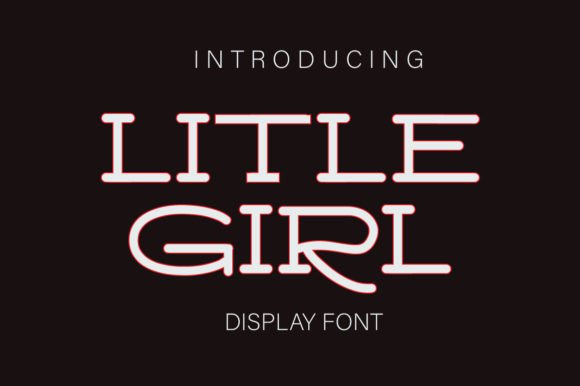
The primary appeal of Litle Girl lies in its structural idiosyncrasies. It features wide, funky characters that immediately signal a relaxed and approachable tone. Unlike rigid geometric sans-serifs or traditional serifs that demand formality, this typeface embraces irregularity. The spacing is generous, and the stroke widths vary in a way that mimics hand-drawn lettering, yet it retains enough consistency to be used effectively across various mediums. When evaluating display fonts, one must consider how the initial visual impact translates to the overall brand message. Litle Girl succeeds in creating an immediate emotional connection, suggesting creativity, playfulness, and a lack of pretension.
Defining the Visual Identity of Litle Girl
To understand the utility of Litle Girl, one must first dissect its core characteristics. The font is categorized as a display typeface, meaning it is optimized for large sizes rather than body text. Its "wide" nature is a deliberate design choice that allows for maximum horizontal space usage, making headlines pop against white space or busy backgrounds. The "funky" descriptor refers to the subtle inconsistencies in the letterforms—slight tilts, uneven baselines, and playful terminals that prevent the text from looking machine-generated.
This distinctiveness is crucial when comparing it to more standard display fonts. Many modern display options lean heavily towards minimalism or extreme stylization, which can limit their versatility. Litle Girl occupies a middle ground. It is quirky enough to stand out but structured enough to remain readable at moderate distances. The unpretentious vibe it conveys is particularly valuable in industries that wish to appear accessible, such as children's education, boutique retail, lifestyle blogs, and creative agencies. It avoids the trap of being overly childish while maintaining a sense of fun that appeals to a broad demographic.
Comparative Analysis: Litle Girl vs. Standard Display Fonts
When selecting a typeface, the decision often comes down to comparing specific attributes against project requirements. In comparison to standard rounded sans-serifs, which are often perceived as soft but generic, Litle Girl offers a higher degree of character. Rounded fonts provide a friendly feel, but they can sometimes lack the unique "hook" necessary for a memorable logo or headline. Litle Girl provides that hook through its irregular geometry.
Conversely, when compared to highly ornate script or handwriting fonts, Litle Girl offers superior legibility. Script fonts often struggle with kerning and readability, especially on digital screens or small print runs. While scripts excel at conveying elegance or intimacy, they can fail when clarity is paramount. Litle Girl mitigates this risk by maintaining open counters and distinct letter shapes. This makes it a safer bet for designs that require both personality and quick comprehension.
- Structural Consistency: Unlike freehand brush fonts that vary wildly between instances, Litle Girl maintains a consistent weight and style across the alphabet, ensuring uniformity in multi-word phrases.
- Horizontal Space: The wide setting of the font requires careful layout planning. Compared to condensed display fonts, it demands more horizontal room, which may not suit narrow columns or compact mobile interfaces.
- Tone Setting: Where slab serifs communicate authority and stability, Litle Girl communicates energy and spontaneity. The choice depends entirely on whether the goal is to establish trust or to invite engagement.
Strategic Use Cases and Best-Fit Scenarios
Determining the right application for Litle Girl requires a clear understanding of the project's objectives. This font excels in scenarios where the goal is to break the monotony of corporate or formal design. It is particularly effective for event invitations, party flyers, and social media graphics where capturing attention quickly is the priority. The wide characters allow for impactful headlines that can be read from a distance, making it suitable for posters and banners.
In the realm of product packaging, Litle Girl can serve as a differentiator. For products targeting parents, educators, or hobbyists, the font suggests a hands-on, human touch. It works well for artisanal goods, craft supplies, and educational materials. However, it is less suitable for luxury brands or financial services, where a sleeker, more restrained aesthetic is typically expected. Using a quirky font in a context demanding seriousness can create cognitive dissonance, confusing the audience about the brand's value proposition.
Digital applications also present specific opportunities. On websites, Litle Girl functions best as a header font. Its distinct shape draws the eye to key sections without overwhelming the user. However, because it is a display font, it should rarely be used for navigation menus or body copy. Pairing it with a neutral, high-contrast sans-serif for body text creates a balanced hierarchy that guides the reader effectively.
Tradeoffs and Limitations to Consider
While Litle Girl offers significant stylistic benefits, it is not without limitations. The most notable tradeoff is its width. In responsive web design or print layouts with strict column constraints, the expansive nature of the characters can lead to awkward line breaks or excessive whitespace. Designers must account for this by adjusting leading (line height) and tracking (letter spacing) carefully to ensure the text flows naturally.
Another consideration is the potential for overuse. Because the font is so characterful, using it for too many elements can result in visual clutter. It is a font that demands restraint; it should be used sparingly to highlight key messages rather than to fill space. Additionally, the "quirky" aspect may date faster than timeless geometric fonts. Trends in typography shift, and what feels fresh today might feel dated in a few years. Therefore, long-term brand identities should weigh the longevity of the style against its immediate appeal.
Decision Factors for Selecting Litle Girl
Before committing to Litle Girl, designers and project managers should evaluate several key factors. First, consider the target audience. Does the demographic respond well to informal, playful aesthetics? If the audience expects professionalism and rigidity, this font may undermine credibility. Second, assess the medium. Will the text be viewed primarily on mobile devices, where screen real estate is limited? If so, the wide characters might necessitate larger font sizes, potentially disrupting the layout.
Third, evaluate the brand voice. Is the brand trying to say, "We are serious experts," or "We are creative partners"? Litle Girl aligns strongly with the latter. Finally, consider the pairing strategy. No font exists in a vacuum. Litle Girl needs a supportive partner—a clean, simple font that allows the display type to shine without competition. Without a proper pairing, the design can feel chaotic rather than cohesive.
Alternatives and Complementary Resources
If Litle Girl does not fully meet the project requirements, there are other avenues to explore. For those seeking similar playfulness but with tighter spacing, condensed display fonts might offer a better fit for narrow layouts. Alternatively, if the goal is a more refined version of whimsy, a semi-handwritten serif could provide a bridge between the quirky and the classic. Exploring these alternatives ensures that the final design choice is driven by functional needs rather than just initial attraction.
Furthermore, utilizing resources that allow for custom adjustments can enhance the effectiveness of Litle Girl. Some design tools permit slight modifications to letter spacing and baseline shifts, allowing users to fine-tune the font to their specific composition. This flexibility can help mitigate some of the inherent limitations of wide display fonts, making them more adaptable to diverse design challenges.
Ultimately, the decision to use Litle Girl should be a calculated one based on the intersection of aesthetic goals and practical constraints. It is a powerful tool for adding an unpretentious, fun vibe to designs, but like any specialized instrument, it requires skill and judgment to wield effectively. By weighing its strengths against its tradeoffs and considering the broader context of the project, designers can determine if this quirky typeface is the right choice for their next endeavor.