Evaluating Enhance Learning for Design Projects
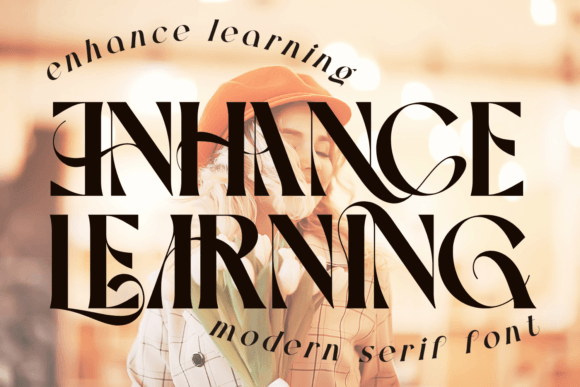
In the realm of digital typography, selecting the right typeface is a critical decision that influences readability, brand perception, and overall aesthetic cohesion. Enhance Learning has emerged as a notable option for designers seeking a specific visual tone. It is a stylish and elegant serif display font that embodies sophistication with flair. Its meticulously crafted letterforms exude a timeless charm, striking the perfect balance between classic and contemporary aesthetics. However, before integrating this typeface into a project, it is essential to understand its functional limitations, ideal use cases, and how it compares to other options in the design ecosystem.
Understanding the Typography of Enhance Learning
To evaluate Enhance Learning effectively, one must first categorize its typographic structure. As a serif display font, it is designed primarily for headlines, logos, and short-form text rather than extended body copy. The defining characteristic of this font family is its high contrast between thick and thin strokes, a hallmark of traditional Didone or modern serif styles. These stylistic choices create a sense of verticality and elegance, making the letters appear tall, slender, and refined.
The "display" classification is significant. Unlike text fonts optimized for legibility at small sizes, display fonts like Enhance Learning prioritize visual impact and character. The intricate details within the letterforms are intended to be viewed at larger point sizes where they can render clearly without losing definition. This distinction sets clear expectations regarding where the font should and should not be applied within a layout.
Reasons to Consider Enhance Learning
Designers and content creators often gravitate toward Enhance Learning when their project goals align with themes of luxury, heritage, or intellectual refinement. The primary driver for interest in this font is its ability to convey authority and grace simultaneously. In an era where many brands rely on minimalist sans-serif typefaces, a well-crafted serif can provide a distinctive allure to your designs, helping a brand stand out in a crowded marketplace.
Furthermore, the versatility of its aesthetic allows it to bridge the gap between old-world charm and modern minimalism. This makes it particularly appealing for projects that need to feel established yet current. Whether for a high-end fashion editorial, a boutique consultancy firm, or a cultural publication, the font's inherent sophistication can elevate the perceived value of the content it accompanies.
Key Benefits for Specific Applications
- Brand Differentiation: The unique curves and serifs offer a visual signature that is difficult to replicate with generic system fonts.
- Emotional Resonance: Serifs are psychologically associated with trust, tradition, and reliability, which can enhance the credibility of a message.
- Visual Hierarchy: Due to its strong presence, Enhance Learning naturally draws the eye, making it effective for establishing a clear hierarchy in headers and titles.
Tradeoffs and Practical Considerations
While the aesthetic appeal of Enhance Learning is evident, potential users must weigh several tradeoffs. The most significant consideration is readability. Because display serifs often feature fine lines and sharp terminals, they can become illegible when rendered at small sizes or on low-resolution screens. Using this font for body text, footnotes, or captions is generally ill-advised and may frustrate readers trying to consume large blocks of information.
Another factor is file size and loading performance. Fonts with complex curves and varying stroke weights can result in larger font files compared to simpler geometric sans-serifs. For web projects where speed is a priority, it is crucial to optimize the font delivery method, perhaps by using variable font technology if available or limiting the number of characters loaded initially.
Additionally, licensing and cost are practical realities. High-quality display fonts are rarely free. Designers must verify the licensing terms to ensure the intended usage—whether commercial, web-based, or app-specific—is covered. Ignoring these legal aspects can lead to compliance issues down the line.
Ideal Situations for Implementation
Enhance Learning finds its strongest fit in environments where the message is concise and the visual presentation is paramount. It excels in scenarios such as:
- Editorial Headlines: Magazine covers, article titles, and section dividers where the text serves as a graphical element.
- Branding and Logos: Creating a wordmark for a business that wants to project elegance, such as law firms, jewelry stores, or artisanal food producers.
- Packaging Design: Product labels where limited space requires a font that communicates quality instantly.
- Invitations and Stationery: Events that require a formal or celebratory tone benefit from the font's refined character.
In these contexts, the font acts as a focal point, guiding the viewer's attention and setting the mood before any detailed reading occurs.
When to Consider Alternatives
Despite its strengths, there are situations where Enhance Learning may not be the optimal choice. If the primary goal is rapid information consumption over long texts, a humanist sans-serif or a robust slab serif would likely perform better. Similarly, for technical documentation, user interfaces requiring dense data entry, or accessibility-focused projects, the fine details of a display serif could pose barriers for users with visual impairments.
Furthermore, if the brand identity aims for approachability, playfulness, or extreme modernity (such as a tech startup targeting Gen Z), the classical nature of Enhance Learning might feel too distant or formal. In such cases, exploring alternatives with softer edges or more open counters could align better with the target audience's expectations.
Decision-Making Insights for Designers
To determine whether Enhance Learning aligns with your specific goals, apply a structured evaluation process. First, conduct a mock-up test. Place the font in your actual design environment at the intended size and resolution. Does it remain crisp? Does it clash with the secondary typeface you plan to pair it with?
Secondly, consider the pairing strategy. A display serif often works best when paired with a neutral, highly readable sans-serif for body text. This combination leverages the elegance of the header while ensuring the content remains accessible. Avoid pairing it with another ornate serif, as this can create visual competition and clutter.
Finally, assess the longevity of the trend. While Enhance Learning balances classic and contemporary elements, ensure that its specific style will not date quickly. Timeless fonts tend to have a balanced weight distribution and avoid overly exaggerated flourishes that might look dated in a few years.
Conclusion
Enhance Learning offers a compelling solution for designers who need to inject sophistication and flair into their work. Its meticulously crafted letterforms provide a distinct aesthetic that can elevate branding, editorial, and packaging projects. However, its effectiveness is contingent upon proper application. By understanding its limitations regarding readability and file performance, and by carefully considering the context of the project, designers can make informed decisions about its inclusion. When used correctly, it adds a distinctive allure; when misused, it can hinder communication. The key lies in recognizing that this is a tool for emphasis and atmosphere, not for mass information delivery.