Twisted Fable: Bringing Mystical Depth to Your Design Projects
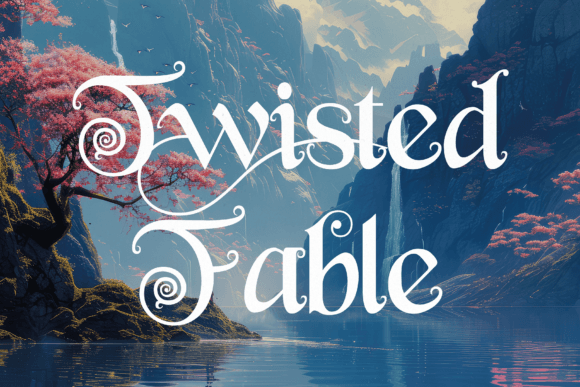
There is a distinct moment in creative work when the right visual element transforms a good concept into an unforgettable experience. For designers, authors, and storytellers working within the realms of fantasy and mystery, Twisted Fable serves as that pivotal catalyst. This typeface does more than simply display text; it conjures an atmosphere, weaving the enchantment of ancient lore with the whimsy of magical tales. It feels as though the letters themselves have been carved by hands long forgotten, designed specifically for projects that demand a touch of the arcane.
When you first encounter Twisted Fable, the intricate letterforms immediately signal a departure from the mundane. The font weaves together elegance and eccentricity, featuring unexpected twists and turns that hint at stories untold. It is not merely a tool for communication but an invitation to embark on a journey into the imaginative and the unknown. Whether you are crafting a novel about dragon riders or designing a user interface for a dungeon crawler, this typeface provides the visual language necessary to ground your audience in a world where magic is real.
The Magic of Real-World Application
The true value of Twisted Fable lies not in its aesthetic description, but in how it performs across various practical scenarios. In the publishing industry, book covers are the primary battleground for attention. A title needs to scream "fantasy" before a reader even opens the jacket. Using Twisted Fable for a book cover allows the typography to act as a narrative device. Imagine a series about elven politics or dark sorcery; the decorative elements of the font suggest hidden depths and complex histories without requiring a single word of blurb copy. It signals to the potential reader that they are stepping into a richly detailed universe.
For game designers, the application shifts slightly toward functionality and immersion. Game interfaces often suffer from generic sans-serif fonts that break the spell of the virtual world. Integrating Twisted Fable into menu screens, quest logs, or character dialogue boxes can significantly enhance the player's sense of presence. However, the key here is balance. Because the font includes a variety of weights and styles, designers can use the bolder versions for headers and titles while relying on lighter, cleaner variations for body text where readability is paramount. This versatility ensures that the mystical allure remains intact without sacrificing the usability required for a smooth gaming experience.
Branding and Promotional Materials
Beyond books and games, Twisted Fable finds a natural home in event planning and brand identity for fantasy-themed businesses. Consider a tabletop gaming store launching a new campaign, a theater company staging a production of A Midsummer Night's Dream, or a convention center organizing a sci-fi and fantasy expo. Promotional materials for these events need to capture curiosity instantly. Posters, flyers, and social media graphics utilizing this typeface stand out because the unique character designs ensure the project captures the attention of its audience.
The font acts as a shorthand for quality and thematic consistency. When a viewer sees the specific ligatures and glyphs associated with Twisted Fable, they subconsciously associate the content with high-quality storytelling and immersive world-building. This makes it an excellent choice for merchandise packaging, such as limited edition board games or collectible card sets, where the unboxing experience should feel like opening a treasure chest. The font elevates the perceived value of the product, suggesting that the contents inside are crafted with care and imagination.
Navigating Readability and Design Choices
While the visual appeal of Twisted Fable is undeniable, practical considerations must guide its implementation. One of the most common pitfalls when using highly decorative typefaces is overuse. The intricate details that make the font mesmerizing can become cluttered if applied to large blocks of text. To maintain clarity, it is best reserved for headlines, short paragraphs, or accent phrases. The font is designed with readability in mind, but this requires a strategic approach to layout. Pairing Twisted Fable with a clean, neutral sans-serif for body copy creates a harmonious contrast that guides the eye effectively.
Another consideration is the context of the medium. On digital screens, particularly mobile devices, the fine lines and decorative flourishes of the font may require careful sizing to prevent pixelation or blurring. Designers should test the font at various resolutions to ensure the "forgotten languages" vibe translates clearly on all devices. Fortunately, the inclusion of an assortment of glyphs and ligatures allows for full creative expression while maintaining structural integrity. These special characters can be used sparingly to add flavor—perhaps replacing a standard period with a magical rune or using a specific ligature to emphasize a key term in a story.
Who Benefits Most from This Typeface?
Authors seeking self-publishing opportunities will find Twisted Fable invaluable for creating professional-grade covers that compete with major publishers. It removes the barrier of needing expensive custom illustration for every project, as the font itself carries significant narrative weight. Game developers, especially indie creators working with limited budgets, benefit from the font's ability to elevate their UI design without extensive asset creation. The variety of weights allows for a cohesive visual system that feels expansive and polished.
Marketing professionals targeting the fantasy demographic also gain a distinct advantage. In a crowded marketplace, generic fonts blend into the background. Twisted Fable offers a unique voice that resonates with adults aged 20–50 who appreciate depth and authenticity in storytelling. It appeals to a sophisticated audience that recognizes the difference between a cliché "magic" font and one that genuinely evokes the mysterious allure of arcane symbols.
Maximizing Creative Expression
Ultimately, the strength of Twisted Fable is its ability to adapt to the creator's vision while maintaining its core identity. It is incredibly versatile, ideal for everything from movie titles to promotional materials for fantasy events. The unexpected twists in the letterforms encourage designers to experiment with spacing, kerning, and alignment. Sometimes, tightening the tracking can make the text look more ominous and compact, like a secret code, while loosening it can give a sense of ethereal floating.
However, users should remain mindful of the font's limitations. It is not a universal solution for every design challenge. In contexts requiring strict legibility, such as legal disclaimers or safety warnings within a game, a simpler typeface is always the safer bet. Twisted Fable shines when the goal is to evoke emotion, spark imagination, and transport the viewer to another realm. By understanding where it fits best, creatives can harness its power to tell stories that linger in the mind long after the screen goes dark or the book is closed.
Incorporating Twisted Fable into your workflow is about embracing the unknown. It challenges the designer to think beyond standard grids and predictable patterns. When used correctly, it transforms static text into a living, breathing element of your project, ensuring that any work it graces captures the attention and curiosity of its audience. Whether you are building a world from scratch or refining an existing one, this typeface offers the perfect blend of elegance and eccentricity to bring your vision to life.